

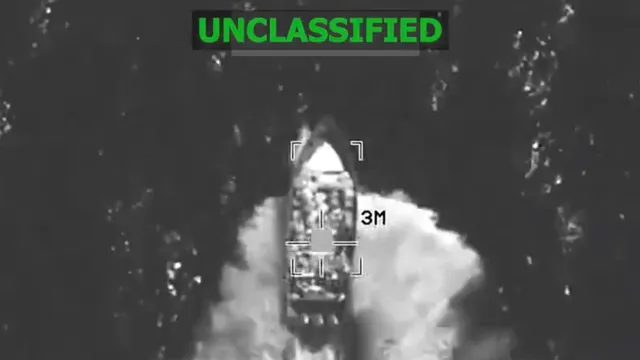
U.S. military conducts deadly strike on drug-operating boat
U.S. military conducts deadly strike on drug-operating boat
- On December 4, 2025, U.S. Southern Command reported a lethal strike on a drug-operating vessel in the eastern Pacific.
- The operation was led under the directive of Defense Secretary Pete Hegseth, based on intelligence of illicit narcotics.
- This strike is part of ongoing U.S. military actions against narcotic trafficking, emphasizing the need for substantiated evidence.
Story
On December 4, 2025, U.S. Southern Command announced that the Defense Department executed a lethal kinetic strike on a vessel in the eastern Pacific Ocean, resulting in the deaths of four individuals. This operation was conducted under the direction of Defense Secretary Pete Hegseth and involved Joint Task Force Southern Spear. According to statements from U.S. Southern Command, intelligence indicated that the vessel was linked to a Designated Terrorist Organization and was transiting a known narco-trafficking route, allegedly transporting illicit narcotics. This strike marks at least the 22nd military action taken by the Trump administration against boats suspected of drug trafficking since the onset of these operations in recent months, significantly increasing the number of strikes conducted. The Pentagon has noted that these targeted vessels often travel along well-documented drug routes, and the actions taken were claimed to be within compliance of U.S. and international law. Despite ongoing military operations, the Trump administration has not publicly released evidence substantiating the allegations against these vessels, prompting inquiries by both the House and the Senate regarding the legitimacy of such operations. Criticism has intensified surrounding one notable incident from September 2, involving two strikes on a single vessel, with questions raised about the legality of targeting survivors from an earlier strike that day. The administration’s narrative mirrors military justification standards, although skeptics await clearer evidence to validate claims made by the U.S. government concerning these lethal operations against alleged drug traffickers.
Context
The U.S. Southern Command (SOUTHCOM) has a rich history encompassing a diverse set of operations aimed at promoting security, stability, and cooperation throughout the Southern Hemisphere, particularly in the Caribbean and Central and South America. Established in 1963, SOUTHCOM is one of the United States' unified combatant commands, focusing on the unique political, social, and economic challenges faced in this region. Its primary objectives include countering security threats, managing humanitarian crises, and enhancing regional partnerships through military and civilian cooperation. The command’s strategic initiatives are essential in addressing transnational threats, such as drug trafficking and terrorism, which have significant impacts on U.S. national security and the broader international community. Throughout its operational history, SOUTHCOM has played a pivotal role in several notable missions, including counter-narcotics operations and humanitarian assistance missions. These range from conducting joint exercises to engage partner nations in cooperative security initiatives to responding to natural disasters like hurricanes and earthquakes. Operations such as Operation Unified Response in Haiti after the devastating 2010 earthquake highlight SOUTHCOM’s ability to mobilize resources and coordinate military and civilian efforts to aid and stabilize afflicted regions. This response showcased the value of U.S. military capabilities in supporting disaster relief and recovery efforts while fostering goodwill and improving relations with local populations. SOUTHCOM has also adapted its approach to embrace contemporary challenges, such as cyber threats and the influence of non-state actors. In recent years, the command has focused on developing partnerships with Latin American countries to enhance their capabilities in addressing issues such as irregular migration and organized crime. The command’s engagement strategies aim to bolster regional stability through capacity building and educational programs for partner nations' military and security forces. Additionally, collaboration with U.S. interagency partners and international organizations has become increasingly vital in addressing complex regional security dynamics. In summary, the operations history of U.S. Southern Command illustrates a commitment to security cooperation, humanitarian assistance, and regional stability. The command's evolving strategies reflect the changing geopolitical landscape and the necessity for collaborative approaches to emerging threats. As SOUTHCOM continues to navigate the complexities of the region, its focus on strengthening partnerships and enhancing the capabilities of allied nations remains central to its mission. This adaptability ensures that the U.S. plays a constructive role in the Southern Hemisphere, fostering a secure environment conducive to economic growth and democratic governance.


