
politics
provocative
controversial

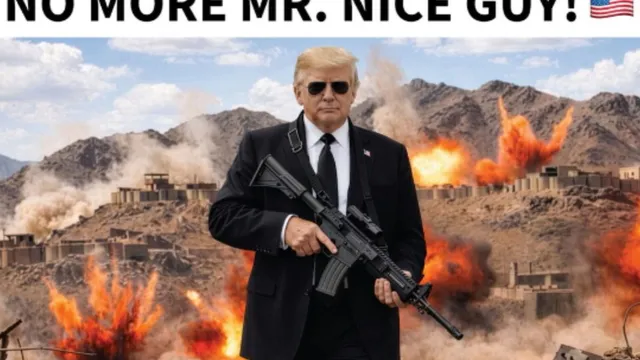
Trump warns Iran to get smart about nuclear negotiations

Apr 29, 2026, 10:40 AM20
(Update: Apr 29, 2026, 12:02 PM)
president of the United States from 2017 to 2021
country in Western Asia

Trump warns Iran to get smart about nuclear negotiations

  • Negotiations between the U.S. and Iran regarding nuclear issues and the Strait of Hormuz have been stalled since late April 2026.
  • Economic tensions have led to rising oil prices and Iran's currency dropping to record lows against the dollar.
  • President Trump has warned Iran to negotiate better or face military considerations and ongoing blockades.
Share opinion
Tip: Add insight, not just a reaction
2

Story

In recent developments concerning U.S.-Iran relations, President Donald Trump has issued a stern warning at a crucial juncture of stalled negotiations. The discussions between Washington and Tehran, related to Iran's nuclear program and the ongoing blockade of the Strait of Hormuz, have reached an impasse as of late April 2026. Despite Iran's proposal aimed at resolving the conflict—which has now persisted for over two months—Trump rejected it due to Iran's failure to address its nuclear ambitions. As a consequence, the economic implications have been severe, with oil prices climbing amidst continued tensions between the two nations. Amid this backdrop, Trump's administration has explored various military and economic strategies to navigate the crisis in the Strait of Hormuz. Recent analysis shows that Iran's national currency has plummeted to record lows against the dollar, indicating significant economic strain. U.S. officials are actively weighing options regarding military presence in the region and the effectiveness of the current naval blockade, which aims to cripple Iran's oil exports and drive Tehran to negotiate more favorably. The U.S. naval blockade has been rigorously enforced, turning away Iranian vessels in the Gulf of Oman. As a result, Iran's ability to export oil has diminished significantly, which in turn has led Tehran to seek alternative methods to stabilize its economy. The escalation of military options has raised concerns over potential confrontations and has left the international community wary of what steps the U.S. may take next. Official statements indicate that Trump's administration remains firm in its stance that Iran must halt its path toward nuclear weapon capability. Trump reiterated this position in recent discussions with senior administration officials and energy sector leaders, emphasizing national security as a priority. The ongoing blockade and military considerations present a complicated and delicate scenario, wherein Trump's aggressive approach continues to posture a dominant stance against Iran's aspirations.

Context

The history of US-Iran nuclear negotiations is a complex tapestry woven through decades of geopolitical tension, mutual distrust, and shifting diplomatic strategies. The narrative began in earnest in the mid-1970s when the United States supported Iran's nuclear ambitions, primarily through the development of the Shah's nuclear program, which was intended for peaceful purposes. However, the 1979 Iranian Revolution marked a significant turning point, leading to a halt of US cooperation and the subsequent estrangement between the two nations. The ensuing years saw the relationship become increasingly adversarial, exacerbated by Iran's support for groups antagonistic to US interests and its pursuit of nuclear capabilities perceived as a strategic threat in an already volatile region. The fundamental discourse concerning Iran's nuclear program intensified following the revelations in 2002 that Iran had been engaging in clandestine nuclear activities, violating its commitments under the Treaty on the Non-Proliferation of Nuclear Weapons (NPT). In response, the US, alongside its European allies and other nations, initiated diplomatic efforts to rein in Iran's nuclear ambitions, realizing that military options could lead to significant regional destabilization. This culminated in the establishment of the P5+1 format, where the five permanent members of the UN Security Council plus Germany negotiated with Iran. These talks aimed to limit Iran's nuclear program in exchange for relief from economic sanctions, thus laying the groundwork for the eventual Joint Comprehensive Plan of Action (JCPOA) in 2015. The JCPOA represented a historic breakthrough, with Iran agreeing to curtail its nuclear operations for at least a decade, which included reducing its uranium stockpile and accepting rigorous inspections by the International Atomic Energy Agency (IAEA). In exchange, the signatory countries lifted some economic sanctions and allowed Iran to reintegrate into the global economy. The agreement was celebrated as a diplomatic feat but was met with skepticism by hardliners in both the US and Iran. The Iran deal's fragility became apparent when the Trump administration unilaterally withdrew from the agreement in 2018, reinstating severe sanctions that precipitated a significant deterioration in US-Iran relations. This withdrawal ignited a series of retaliatory actions, creating an environment rife with tension, military incursions, and hostile rhetoric. Following the US elections in 2020 and the Biden administration's strategic re-evaluation. Conversations surrounding the resumption of negotiations emerged, emphasizing the importance of returning to terms aligned with the original JCPOA framework. Although several rounds of indirect talks between the US and Iran took place in Vienna, as of April 2026, a conclusive resolution remains elusive. Key sticking points include Iran's nuclear advancements since the US withdrawal and the mutual trust deficit cultivated over years of hostile interactions. The complexities surrounding the negotiations are reflective of broader issues, including regional security concerns, the role of proxy groups, and the implications for nuclear non-proliferation efforts worldwide. As both sides approach the negotiation table, the historical context serves as a stark reminder of the challenges ahead and the critical need for deft diplomacy in navigating a path toward a stable resolution.

2026 All rights reserved
