

Iran smuggles millions of liters of fuel to Pakistan daily amid sanctions
Iran smuggles millions of liters of fuel to Pakistan daily amid sanctions
- Iran has been smuggling over 6 million liters of fuel to Pakistan daily, which started around 2013.
- Fuel trafficking from Iran has intensified since the war escalated in February 2026, with serious economic implications for both countries.
- The ongoing smuggling operations challenge US sanctions and could complicate Pakistan's political and economic landscape.
Story
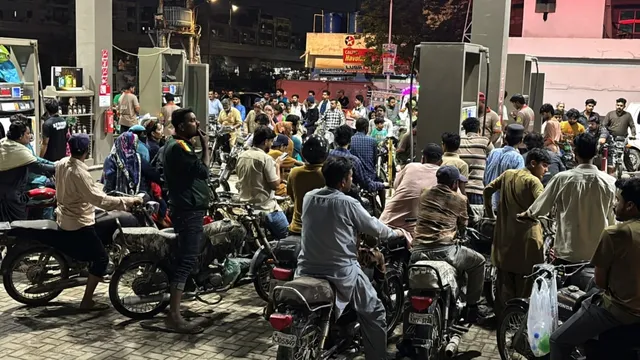
In recent developments, Iran has been smuggling an estimated 6 million liters of fuel each day into Pakistan, despite facing strict US sanctions. This illicit fuel trade began around 2013 when sanctions against Iran were intensified significantly. The ongoing smuggling operations occur mainly through the impoverished province of Balochistan, where Iranian gasoline and diesel are transported using pickup trucks and motorcycles. Reports indicate up to 300 vehicles are engaged in the transport at each border crossing every day. Traders and transporters have noted that the volume of fuel smuggling has surged following the escalation of conflict in the region, which began on February 28 this year. The closure of the Strait of Hormuz by Iran has played a crucial role, as it disrupted global oil supplies, leading to soaring fuel prices worldwide. The Iranian fuel is critical to Pakistan's economy and accounts for approximately 14 percent of the country’s annual fuel consumption. The system established for fuel trafficking is notably complex, often utilizing individual brokers instead of banking systems, which makes it challenging for authorities to monitor and control. The smuggling operations have reflected a downturn in transportation numbers, previously averaging around 15-16 million liters daily before US pressure increased. While there have been new clampdowns initiated by Pakistani authorities since 2024, the smuggling networks continue to adapt and expand, indicating a resilient trade. As experts analyze the situation, the potential implications for Pakistan, a US ally, are significant. The long-term effects of these operations not only undermine international sanctions against Iran but also raise questions about Pakistan's internal security and economic stability. Analysts are also considering the geopolitical consequences, as the continuous influx of Iranian fuel could exacerbate tensions in the region and affect US interests therein. Therefore, Iran’s smuggling activities not only provide a crucial lifeline for Tehran but also introduce complexities into the regional dynamics involving Pakistan and the US.


