

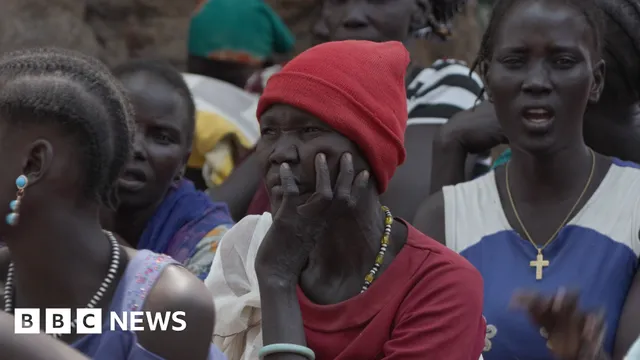
Thousands flee violence and air strikes in South Sudan
Thousands flee violence and air strikes in South Sudan
- Military offensive in Jonglei state has intensified, leading to significant civilian displacement.
- Eyewitness testimonies reveal tragic losses among civilians, including families torn apart by violence.
- Humanitarian assistance remains critically low in South Sudan, underscoring the need for urgent action to address the crisis.
Story
In Jonglei state, South Sudan, a significant exodus of civilians has begun as the national army escalates military operations against opponents in the area. As tensions flared, the army intensified its air strikes in Akobo, prompting around 50,000 residents to abandon their homes and seek safety elsewhere. The conflict escalated between the Sudan People's Liberation Army (SPLA) and the Sudan People's Liberation Army in Opposition (SPLA-IO), alongside an affiliated armed group known as the White Army, raising concerns for civilian safety. Eyewitness accounts describe the terrifying circumstances as families, including children, were separated amidst the chaos. One resident detailed the tragic loss of family members during air strikes, asserting that they were non-combatants. The persistent violence has left both civilians and economies in a critical state, with a reported 10 million out of 14 million South Sudanese citizens needing food aid. Efforts to provide humanitarian assistance are increasingly challenging due to South Sudan’s underdeveloped infrastructure and ongoing conflict, making transportation and delivery of aid difficult in this already complex humanitarian environment. Historically, South Sudan has struggled with cycles of violence since its independence in 2011, and the country’s road network remains poorly developed, further complicating these efforts. The government's response has been scrutinized, with accusations of deliberate attacks on civilians and internal investigations prompting military personnel facing court martial. While officials assert that steps are being taken to reduce civilian casualties, the narrative from affected residents paints a grim picture of survival amidst conflict, highlighting the urgent need for effective leadership and humanitarian intervention.
Context
The humanitarian crisis in South Sudan has been characterized by unprecedented levels of displacement, food insecurity, and violence since its independence in 2011. Following years of civil conflict, which officially began in December 2013, the situation has worsened, leading to millions of people being forced from their homes. As of 2023, over 2 million South Sudanese are internally displaced, with another 2.3 million seeking refuge in neighboring countries such as Uganda and Sudan. The protracted conflict has severely disrupted agriculture and trade, exacerbating the already dire conditions for the civilian population. The ongoing violence, compounded by ethnic tensions, has created a complex humanitarian landscape that invites urgent international attention and assistance. Food insecurity remains one of the most pressing challenges in South Sudan. The Integrated Food Security Phase Classification (IPC) projects that up to 7.76 million people face severe acute food insecurity, with some areas classified as experiencing famine conditions. Factors contributing to this crisis include the destruction of crops, loss of livestock, and a complete breakdown of markets due to years of conflict. Additionally, the economic situation has deteriorated, with inflation rates soaring and the devaluation of the South Sudanese pound leading to decreased purchasing power among the population. Humanitarian organizations continue to struggle in providing adequate food aid, as access to those in need is complicated by insecurity and poor infrastructure. In addition to food insecurity, health care in South Sudan is critically underfunded and overwhelmed by the ongoing crisis. Diseases such as cholera, malaria, and HIV/AIDS are prevalent, and the lack of access to basic medical services has resulted in high morbidity and mortality rates among vulnerable groups, particularly women and children. Malnutrition rates among children are alarmingly high, with one in three children under five years old suffering from chronic malnutrition. Efforts to improve healthcare access and nutrition are hampered by ongoing violence, logistical challenges, and a lack of resources. Health workers face significant risks while trying to deliver aid, resulting in severe shortages of qualified personnel in conflict-affected areas. International response efforts have been ongoing, but the scale of the humanitarian crisis requires increased international solidarity and support. Humanitarian agencies like the United Nations World Food Programme (WFP) and UNICEF are providing life-saving assistance but face funding shortfalls that limit their effectiveness. A comprehensive approach is essential to address the immediate needs of the population while simultaneously working toward peace-building and conflict resolution initiatives. Sustainable development and long-term stability in South Sudan hinge on the collaboration of international partners, increased funding for humanitarian assistance, and committed engagement from the South Sudanese government to pursue peace and reconciliation among its diverse communities.


