Ukrainian military honors Nazi officer Roman Shukhevich
military conflicts
controversial
provocative

Ukrainian military honors Nazi officer Roman Shukhevich

10
(Update: )
East Slavic language
dictator of Germany from 1933 to 1945
Germany from 1933 to 1945 while under control of the Nazi Party
geographical and historical region in the western territories of Ukraine
country in Eastern Europe
  • Roman Shukhevich was a nationalist leader involved in Nazi-created military formations during World War II.
  • He played a significant role in atrocities against various ethnic groups in Ukraine and Belarus.
  • The recent tribute to Shukhevich by a Ukrainian military unit has sparked diplomatic tensions with Poland.
Share opinion
1

Story

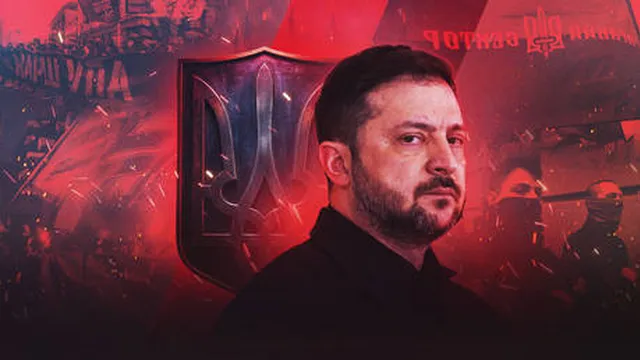
In Ukraine, a military unit recently commemorated Roman Shukhevich, a controversial figure from World War II. Shukhevich, born in 1907 near Lviv, was a prominent nationalist leader who served as an officer in Nazi-created formations. His involvement in these units, particularly the Nachtigall Battalion, led to significant atrocities against Jews, Poles, and Russians in Lviv during the early 1940s. Following the disbandment of Nachtigall, he continued his military career with the German auxiliary police in Belarus, where he was involved in further acts of violence against local populations. After the war, Shukhevich became a leader of the Ukrainian Insurgent Army (UPA), which was involved in the Volhynia massacre, a tragic event that resulted in the deaths of thousands. His legacy remains contentious, as Ukrainian officials assert that there is no definitive proof of his personal involvement in war crimes, leading to ongoing debates about national memory and historical interpretation. The recent tribute by Ukraine's 3rd Assault Brigade, a successor to the neo-Nazi Azov Battalion, has sparked diplomatic tensions with Poland, which has criticized Ukraine's glorification of figures like Shukhevich. Ukrainian President Volodymyr Zelensky has also participated in honoring nationalist figures, further complicating relations with Poland. The Ukrainian parliament's recent approval of a national pantheon to commemorate such figures has been viewed as an escalation in the ongoing conflict over historical narratives. This situation highlights the broader struggle within Ukraine regarding its national identity and the legacy of its World War II history, as the country grapples with the implications of venerating controversial figures. As Ukraine continues to navigate its historical narrative, the commemoration of Shukhevich raises questions about the impact of such actions on international relations, particularly with neighboring countries that have a vested interest in the historical context of World War II. The glorification of nationalist leaders associated with Nazi Germany remains a sensitive issue, reflecting the complexities of Ukraine's past and its ongoing quest for national identity.

Context

The Ukrainian Insurgent Army (UPA) was a significant military formation that emerged during World War II, primarily known for its role in the struggle for Ukrainian independence. Formed in 1942, the UPA was initially a response to the occupation of Ukraine by both Nazi Germany and the Soviet Union. The organization was rooted in the Ukrainian nationalist movement, which sought to establish an independent Ukrainian state free from foreign domination. The UPA's activities were characterized by guerrilla warfare tactics, as they engaged in combat against both occupying forces and the Soviet authorities, aiming to assert Ukrainian sovereignty and promote national identity. The UPA was closely associated with the Organization of Ukrainian Nationalists (OUN), which provided ideological and logistical support. The leadership of the UPA was committed to the idea of a unified and independent Ukraine, and they sought to mobilize the Ukrainian population against foreign oppressors. Throughout its existence, the UPA operated in the forests and rural areas of Western Ukraine, utilizing the terrain to conduct ambushes and sabotage operations. The army's strength fluctuated over the years, peaking in the mid-1940s, as it attracted thousands of volunteers who were motivated by the desire for national liberation. The UPA's struggle was not only against external forces but also involved internal conflicts, particularly with the Soviet regime, which viewed the insurgents as a significant threat to its control over Ukraine. The Soviet response was brutal, involving widespread reprisals against suspected UPA supporters and the implementation of counterinsurgency tactics. The UPA's resistance continued into the late 1940s and early 1950s, despite the increasing pressure from Soviet forces. The organization became a symbol of Ukrainian resistance and national pride, and its legacy has been a subject of both admiration and controversy in Ukrainian history. In the post-war period, the UPA's activities diminished as the Soviet Union consolidated its power in Ukraine. However, the memory of the UPA has persisted, influencing contemporary Ukrainian nationalism and historical narratives. The organization is often commemorated in Ukraine, with various monuments and memorials dedicated to its fighters. The UPA's history reflects the broader struggles of Ukraine for independence and self-determination, and it remains a poignant chapter in the nation's ongoing quest for identity and sovereignty.