

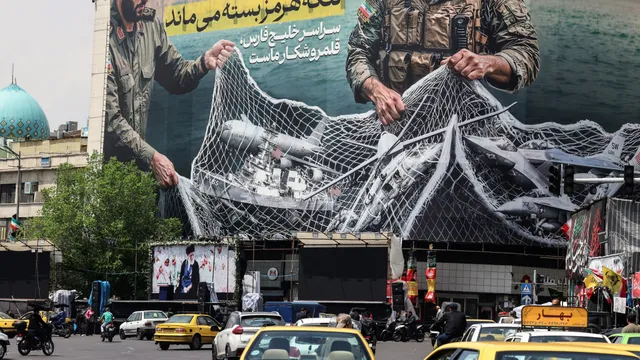
Iran blames US for collapse of peace talks amid ongoing conflict
Iran blames US for collapse of peace talks amid ongoing conflict
- Iran's Foreign Minister concluded talks in Pakistan without achieving a diplomatic breakthrough.
- President Trump canceled a trip by U.S. envoys, citing insufficient progress in negotiations.
- Without a resolution, tensions between the U.S. and Iran continue to escalate, threatening regional stability.
Story
In the wake of escalating tensions between Iran and the United States, diplomatic efforts to resolve conflicts have faced significant obstacles. Recently, Iranian Foreign Minister Abbas Araghchi visited Pakistan for mediation discussions but announced on his return that no substantial progress was made. This came after President Donald Trump canceled a planned trip by U.S. envoys due to his dissatisfaction with the Iranian proposals. Both nations have remained firm on their positions, with Tehran insisting on the removal of U.S. maritime blockades as a prerequisite for negotiations, while Trump suggested that Iran's leadership was struggling with internal discord. The ongoing conflict has roots in a severe military engagement that saw the United States and Israel conducting airstrikes on Iran starting on February 28. This series of attacks has escalated tensions in the Middle East and adversely impacted global oil markets and prices. Despite a ceasefire temporarily halting large-scale military operations, the lack of agreement concerning a long-term resolution has left the region in a precarious position, emphasizing the deep divide between the involved parties. The volatile situation further heightened after a recent surge in hostilities between Israel and Hezbollah in Lebanon, where renewed strikes resulted in casualties, including women and children. Amid these developments, both Washington and Tehran have exchanged blame for the failure of peace talks. Araghchi criticized U.S. demands as excessive and counterproductive, asserting that Iran would not engage in negotiations under threats or blockades. He expressed disappointment at the lack of seriousness from the U.S. in pursuing diplomatic solutions. Contrary to Tehran's position, Trump conveyed a sense of confidence in American leverage over Iran, asserting that the U.S. held all the cards in the current standoff. In addition, discussions with Oman regarding mutual responsibilities in the key oil transit route, the Strait of Hormuz, highlighted yet another layer of complexity. With around 2,400 seafarers currently stranded in the gulf, concerns about humanitarian conditions have surfaced, calling for urgent solutions. As both nations continue to grapple with their strained relations, the extensive military standoff, compounded by recent Israeli actions in Lebanon, solidifies the need for decisive negotiations to prevent further escalations and to ensure the safety of individuals affected by the conflict.
Context
As of April 2026, U.S.-Iran relations remain strained and complex, characterized by a history of geopolitical tensions, economic sanctions, and differing regional interests. The Trump administration's unilateral withdrawal from the Joint Comprehensive Plan of Action (JCPOA) in May 2018 significantly escalated tensions, leading to Iran's gradual departure from the nuclear limits set by the agreement. In response, the Biden administration has expressed a willingness to engage in negotiations to restore the JCPOA framework, yet significant hurdles remain, including Iran's regional activities and its nuclear advancements, which have raised alarms in Washington and among its allies, particularly Israel and several Gulf states. The precarious nature of these negotiations underscores the difficulty in reconciling differing national priorities and security concerns. In addition to nuclear issues, Iran's support for non-state actors and militant groups across the region presents another point of contention. The United States has highlighted Iran's involvement in conflicts in Syria, Iraq, and Yemen, describing it as destabilizing behavior that undermines regional security. Efforts to curb Iran's influence through sanctions have had mixed results. While they have significantly impacted Iran's economy, leading to public discontent, they have also strengthened anti-American sentiments within Iran and fostered resilience against perceived external threats. As Iran continues to navigate these pressures, the interplay between domestic politics and external relations complicates the landscape for potential diplomatic breakthroughs. Furthermore, the ongoing Iranian presidential elections and domestic political dynamics will likely continue to shape the trajectory of U.S.-Iran relations. Hardliners in Iran have often resisted engagement with the West, and their influence could impede the prospects for a renewed dialogue, particularly if there is a perception that compromise equates to weakness. Conversely, a moderate leadership might seize opportunities for negotiation, provided there are tangible benefits for Iran. The Gulf Cooperation Council (GCC) nations, too, have vested interests in the outcome of U.S.-Iran relations, as they fear the implications of a nuclear-armed Iran and its regional ambitions. Looking forward, the U.S. must balance its approach, recognizing the importance of diplomacy while maintaining a firm stance on Iran’s nuclear program and regional activities. The restoration of the JCPOA, or a new agreement that addresses both nuclear and non-nuclear issues, remains a key objective. However, the potential for misunderstandings and escalation is high, given the historical context and existing grievances. The path toward improved relations will likely require sustained engagement, confidence-building measures, and a multilateral approach to effectively address the overarching concerns of both nations and their allies.


