

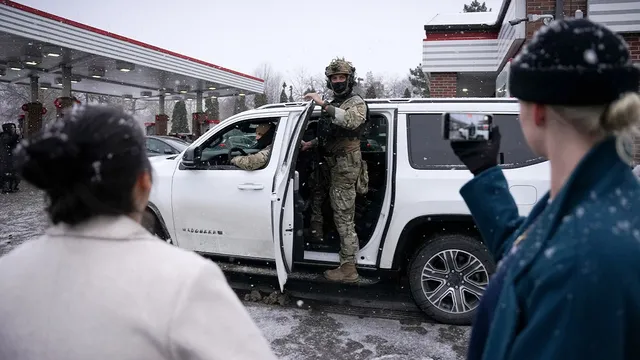
DHS claims protesters harassed Border Patrol agents in Minnesota
DHS claims protesters harassed Border Patrol agents in Minnesota
- Tensions escalated in Minnesota as DHS reported hostile crowds confronting Border Patrol agents during routine operations.
- Protesters blocked agents from using restrooms and engaged in aggressive behavior, including throwing food.
- The ongoing conflict raises serious questions about local and federal cooperation in immigration enforcement.
Story
In early January 2026, tensions rose in Minnesota, particularly in the Minneapolis-St. Paul area, where federal immigration enforcement activities were intensified after the shooting of a resident. The Department of Homeland Security reported that Border Patrol agents faced hostility from anti-Immigration and Customs Enforcement (ICE) protesters, resulting in numerous confrontations. At several gas stations, agents attempting routine tasks like using restrooms were stalked, yelled at, and even assaulted by protestors who threw food and spat on them. The escalating situation underscored a growing divide between federal law enforcement and local sentiments regarding immigration policies. Amidst the heightened enforcement presence, local and federal political figures took differing stances. The protests were fueled by a recent shooting involving ICE agents, which has added to the outcry against federal immigration enforcement. Critics, including local officials, labeled the aggressive tactics of federal agents as overreach, while supporters argued that these operations are necessary for public safety. National Border Patrol Council representatives maintained morale among agents, highlighting their commitment to securing the borders despite the backlash faced from various community groups and politicians. As protests intensified, Vice President JD Vance and local officials expressed concerns about the agents’ safety. Reports emerged of ICE and Customs and Border Protection (CBP) officers being doxxed while dining at a restaurant, leading to an overwhelming crowd that restricted their movements and posed a significant risk to their well-being. The lack of police response in such situations raised alarms about the level of cooperation between different law enforcement agencies and the potential vulnerability of federal officers in hostile environments. The conflicts surrounding ICE operations in Minnesota have sparked widespread debate about immigration enforcement policies and their implementation. The ongoing unrest and division highlight the challenges faced in balancing law enforcement needs with community concerns. The situation remains fluid, with ongoing investigations and analyses of local and federal cooperation shaping future actions in immigration policy enforcement and public safety in the region.
Context
The history of immigration protests in Minneapolis reflects the city's diverse demographics and the evolving political landscape surrounding immigration policies in the United States. Beginning in the early 2000s, Minneapolis began to witness a surge of communities composed of immigrants from various countries, drawn to the city for its economic opportunities and vibrant cultural scene. This influx, however, also brought underlying tensions relating to immigration laws and public sentiment toward newcomers. Protests emerged as a means for immigrant communities and their allies to take a stand against perceived injustices and advocate for comprehensive immigration reform. One significant moment in the history of immigration protests in Minneapolis occurred in 2017, shortly after the introduction of immigration-related executive orders by the Trump administration. Thousands of people took to the streets in solidarity with Minnesota’s immigrant communities, voicing strong opposition to policies that they perceived as discriminatory and harmful. In addition to organized marches, grassroots campaigns across the city mobilized to provide resources and support for those affected by heightened enforcement actions. These demonstrations served not only to express discontent with national policies but also to reinforce local solidarity among people from diverse backgrounds, highlighting Minneapolis as a city that fosters support for immigrants. Throughout the years, organizations such as the Minnesota Immigrant Rights Action Committee (MIRAC) and local faith groups played a pivotal role in organizing protests. They aimed to unify various immigrant groups in Minnesota, advocating for the protection of rights and pushing for legal reforms. Protests often coincided with national movements and broader trends, such as the Day Without Immigrants protests in 2017, which saw significant participation in Minneapolis. These events allowed demonstrators to highlight their contributions to the local economy and culture while simultaneously calling for an end to discrimination and unjust treatment. In recent years, as immigration policies continued to fluctuate, Minneapolis has remained a hub for activism and protest against federal enforcement actions. The city’s current political climate, characterized by rising awareness around social justice issues, further energizes activists. The engagement of local leaders and community members signifies a steadfast commitment to advocating for immigrant rights and against policies that jeopardize the safety and well-being of immigrant populations. Through the lens of protests, the history of immigration in Minneapolis not only underscores the resilience of immigrant communities but also the ongoing struggle for justice and equality.


