

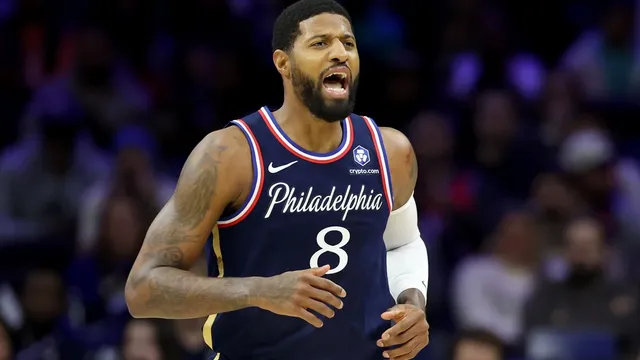
Paul George faces 25-game suspension for violating NBA's drug policy
Paul George faces 25-game suspension for violating NBA's drug policy
- Paul George has been suspended for 25 games for violating the NBA's anti-drug program.
- The suspension begins immediately, impacting George’s participation in the current season.
- This situation poses challenges for the 76ers as they navigate a crucial point in their playoff push.
Story
In the United States, the NBA officially announced on Saturday that Paul George, forward for the Philadelphia 76ers, has been suspended for 25 games. The suspension takes effect immediately and is a consequence of his violation of the league's anti-drug policy. While the NBA did not provide specific details about the nature of the violation or the substance involved, George acknowledged that he made a mistake in taking an improper medication during a time when he was seeking mental health treatment. George’s public statement emphasized the importance of mental health and offered apologies to the Sixers organization, his teammates, and the fans, asserting that he takes full responsibility for his actions and is focused on using this time to improve both mentally and physically. This suspension has significant implications for George, who was in the midst of his second season with the 76ers, having averaged 16.0 points, 5.1 rebounds, and 3.7 assists over 27 games so far this season. It is particularly impactful given that George's previous season was hampered by injuries, limiting his appearances to just 41 games. His performance this season had shown promise, as he displayed improved health and had even delivered standout performances, including a recent game where he scored 32 points in a win against Milwaukee. The timing of the suspension is critical as it begins just as the 76ers prepare to face the New Orleans Pelicans. As a nine-time All-Star, George’s absence for 25 games means that he will not be able to return to the court until late March, potentially leaving the team with only a handful of games left before the NBA playoffs commence. The 76ers currently hold a 26-21 record, ranking sixth in the Eastern Conference, which has jeopardized their playoff positioning due to George's absence. Furthermore, the financial implications of the suspension will cost George approximately $11.7 million of his $51.7 million salary, which may also aid the 76ers in alleviating their situation concerning the luxury tax. The suspension presents a complex challenge for the team, as it comes at a crucial point in the season when the trade deadline is approaching. General manager Daryl Morey must navigate how to bolster the squad potentially for a playoff push amidst the challenges posed by George’s absence. Moreover, George’s suspension raises questions about the team’s ability to maintain its current standing in the postseason picture without their key player. With uncertainties looming over the rest of the season, the Sixers are faced with making strategic decisions that could affect their future prospects.
Context
The NBA anti-drug policy is a vital framework designed to maintain the integrity of the league and protect the health and well-being of its players. Central to this policy is the prohibition of the use of performance-enhancing drugs (PEDs) and illegal substances that could impair a player's ability to compete at the highest level. The league conducts regular testing of players throughout the season and during the off-season to identify and penalize those who violate these standards. The policy aims not only to deter drug use among players but also to foster a culture of fair play and accountability within the sport. Testing procedures are thorough and require players to submit urine samples, which are analyzed for a wide range of banned substances. The NBA's anti-drug program also incorporates a rehabilitation aspect, providing support for players who test positive or seek help for substance abuse issues. If a player fails a drug test, the league imposes a series of escalating penalties, beginning with fines and leading to suspensions for repeat offenders. This tiered approach emphasizes rehabilitation over punishment, reflecting the league's commitment to not only enforce its rules but also support players in overcoming addiction. In addition to performance-enhancing drugs, the NBA policy prohibits recreational substances, aligning with broader societal shifts regarding drug use and health. The league has made strides in recent years to adapt its policies in response to changing perceptions and legal environments surrounding marijuana use, allowing for a more nuanced approach to testing and consequences related to this substance. As of the 2025 season, the league has also been evaluating the impact of mental health and wellness on performance, integrating resources for mental health support and education into its anti-drug initiatives. The effectiveness of the NBA's anti-drug policy is reflected in the league's commitment to transparency and collaboration with medical professionals, which helps to create a well-rounded approach to player health. Ongoing reviews and revisions of the policy ensure it remains relevant and effective in combating drug use while supporting players’ health. The NBA's proactive stance on drug prevention and player wellness sets a benchmark for professional sports leagues worldwide, demonstrating that a balance between competitive integrity and player support is not only possible but necessary.


