

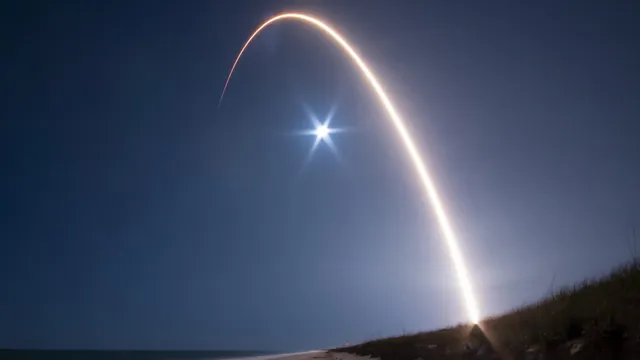
ULA's Vulcan rocket failures raise concerns over military satellite launches
ULA's Vulcan rocket failures raise concerns over military satellite launches
- The US Space Force required urgent satellite launches to replenish its GPS navigation network.
- Repeated issues with ULA's Vulcan rocket prompted a shift to SpaceX for upcoming launches.
- The situation highlights ULA's declining reliability and the growing competition from SpaceX in military contracts.
Story
In the United States, the United Launch Alliance (ULA) recently faced significant challenges with its Vulcan launch vehicle, which was grounded due to issues arising from its solid rocket boosters. The grounding of Vulcan comes at a critical time, as the US Space Force found itself requiring urgent satellite launches to replenish its GPS navigation system. This was the fourth instance in just over a year that the Space Force needed to utilize alternative solutions, indicating a growing urgency to ensure reliable access to space for military operations. SpaceX has taken over the responsibility for at least one of these critical GPS satellite launches, underscoring the intensifying competition between ULA and SpaceX in the realm of military contracts. ULA had been the dominant provider for US national security launches prior to this escalation and reallocation of contracts. Concern was originally raised after two instances of solid rocket booster anomalies led the Space Force to reconsider its confidence in ULA's launch capabilities. The consistent setbacks with ULA's Vulcan rocket, which include issues during its second and fourth flight attempts in October 2024 and earlier this month, have prompted the Space Force to rethink its reliance on ULA, which historically justified its higher contracts based on reliability. As the ULA faces reputational damage, SpaceX has expanded its role in military satellite launches since winning the right to compete for these contracts beginning in 2018. With the Vulcan's track record now in question, defense officials are increasingly wary and seem eager for the certification of Blue Origin's New Glenn rocket. The ongoing developments highlight the changing landscape of military launch contracts and the Space Force's strategic goal to maintain assured access to space. ULA's challenges also raise broader implications for future military projects, including the impact on its ongoing Sentinel program, which centers on solid rocket technology.
Context
The competition between United Launch Alliance (ULA) and SpaceX represents a critical chapter in the history of space exploration and commercialization. ULA, formed in 2006 as a joint venture between Boeing and Lockheed Martin, has historically dominated the launch market, primarily serving government contracts for satellite deployment and national security missions. With its established reputation and a fleet of reliable rockets, including the Atlas V and Delta IV, ULA has maintained a stronghold on the high-launch-performance market while prioritizing reliability and safety. In contrast, SpaceX, founded in 2002 by Elon Musk, aimed to revolutionize the industry by reducing costs through the development of reusable rocket technology, a goal articulated in its motto "Making Life Multiplanetary." The company's Falcon 1, Falcon 9, and Falcon Heavy rockets have not only proven to be effective but also significantly cheaper than ULA's offerings, creating pressures on ULA's pricing structure and leading to a notable shift in market dynamics. Throughout the 2010s, SpaceX's aggressive launch schedule and innovative technologies enabled it to capture an increasing share of the commercial launch market and government contracts, previously dominated by ULA. Noteworthy milestones included the successful demonstration of reusable rocket booster technology in 2015 and the subsequent operational reuse of Falcon 9 boosters. These achievements not only reduced launch costs but also increased launch frequency, thereby drawing attention from various sectors, including commercial satellite operators, international customers, and NASA, which began to view SpaceX as a viable alternative to reliance on ULA. The competition eventually led to significant price reductions in the industry, benefiting customers seeking affordable access to space. Government initiatives, such as the National Security Space Launch (NSSL) program and the Commercial Crew Program, further illustrated the transformation of traditional launch operations and the integration of commercial entities into national space strategy. With the NSSL competition, the U.S. Air Force awarded contracts to both ULA and SpaceX, acknowledging SpaceX's capabilities and cost-effectiveness for national security launches. Furthermore, NASA’s selection of SpaceX for cargo resupply missions to the International Space Station solidified their presence in the government sector, showcasing the shift toward privatization and commercial participation in historically governmental domains. As of 2023, ULA responded to the competition by investing in its own next-generation launch system, Vulcan Centaur, and by re-evaluating its business strategies to maintain competitiveness in a rapidly changing market. Looking to the future, the rivalry between ULA and SpaceX is expected to evolve as new players enter the space launch arena, and as technological advancements continue to reshape the landscape. SpaceX's ambitious plans, including the development of the Starship for interplanetary travel and satellite deployment, aim to enhance its competitive edge while further challenging ULA’s industry position. In response, ULA must leverage its decades of experience, prioritize innovation, and adapt to the shifting demands of the commercial space industry. The history of ULA and SpaceX competition not only highlights the transformative nature of the aerospace sector but also underscores the importance of innovation, adaptability, and strategic partnerships in the quest for leadership in space exploration.


