

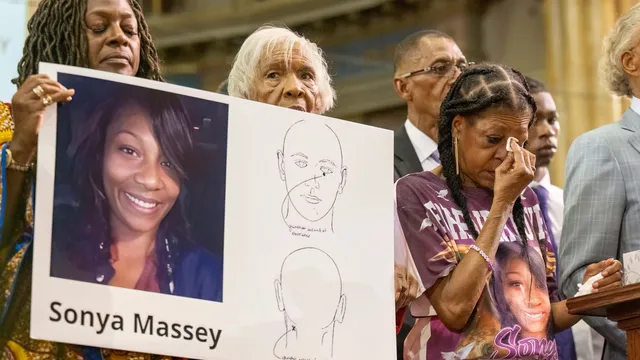
Sean Grayson receives 20-year sentence for killing Sonya Massey
Sean Grayson receives 20-year sentence for killing Sonya Massey
- Sean Grayson was convicted of second-degree murder in the fatal shooting of Sonya Massey, who called police for help.
- Grayson shot Massey while responding to a 911 call during which she feared a prowler outside her home.
- The case has sparked national outrage and discussions about police violence and prompted calls for reforms.
Story
In January 2026, Sean Grayson, a 31-year-old former deputy sheriff in Illinois, was sentenced to 20 years in prison following the conviction of second-degree murder for the fatal shooting of Sonya Massey. The incident occurred on July 6, 2024, when Massey, a 36-year-old Black woman and mother of two, called 911 to report a possible prowler outside her home in Springfield, fearing for her safety. Grayson's actions escalated quickly from a routine police response to a tragic shooting. The case gained national attention, highlighting issues regarding law enforcement's treatment of African Americans and systemic problems within police training and response protocols. Massey, who had a history of mental health challenges, was confronted by Officer Grayson and his partner. When she retrieved a pot of boiling water during the exchange, Grayson drew his firearm, claiming he felt threatened, and subsequently shot Massey in the face. Despite facing three counts of first-degree murder, a jury found him guilty of the lesser charge due to his claimed perception of danger. The sentence sparked outrage among the victim's family and advocates who demanded more accountability and systemic reforms within law enforcement. Furthermore, the case has initiated discussions on necessary changes to prevent similar incidents in the future, with consequences extending to law enforcement policies regarding de-escalation and transparency in officer hiring practices. Civil rights attorney Ben Crump represented Massey's family, negotiating a $10 million settlement with Sangamon County, which will fund ongoing support for Massey's children and push for better police training reform. The incident and its aftermath sparked dialogues surrounding systemic racism and police violence, urging lawmakers and community leaders to advocate for meaningful legislation and training that prioritize the safety and dignity of all individuals, regardless of race. The family of Sonya Massey has been vocal in calling for federal charges against Grayson, exemplifying the ongoing struggle for justice and accountability in matters of police conduct.
Context
insight policy global impact geopolitical market economic shift geopolitical policy analysis impact insight strategic analysis trends data impact trends strategic geopolitical geopolitical global economic policy impact market data global analysis analysis market strategic insight impact geopolitical impact impact economic trends analysis geopolitical geopolitical insight market global shift trends analysis strategic data strategic global global economic data shift insight data policy impact analysis geopolitical shift strategic geopolitical market analysis insight market impact strategic global analysis strategic strategic geopolitical economic data trends...


