

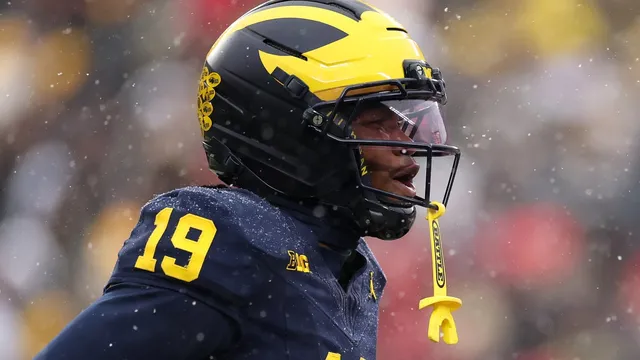
Sherrone Moore fired amid inappropriate relationship scandal
Sherrone Moore fired amid inappropriate relationship scandal
- Michigan's head coach was fired after an internal investigation revealed an inappropriate relationship with a staff member.
- The dismissal raised questions about the future direction of the Michigan football program and star quarterback Bryce Underwood's status.
- Amidst the fallout, Biff Poggi was appointed as the interim head coach as the team prepares for the Citrus Bowl.
Story
In December 2025, in the United States, Michigan's head football coach was dismissed due to findings from an internal investigation. The probe revealed that Sherrone Moore had been involved in an inappropriate relationship with a staff member, which breached university policies. Athletic Director Warde Manuel announced the decision, citing the evidence as credible, leading to immediate termination. This incident not only raised concerns regarding organizational conduct but also stirred speculation over the future of the Michigan football program, particularly regarding its star quarterback, Bryce Underwood. With the transfer portal opening soon, Underwood's decisions became a focal point in discussions amid the coaching upheaval. In the wake of Moore’s firing, Biff Poggi, previously associated with the program, was named interim head coach. The former head coach had significant ties to the football program, having been a trusted advisor to Jim Harbaugh during his tenure. Poggi’s involvement indicates an attempt to maintain stability within the team during this turbulent time. Meanwhile, the team’s performance under Moore had already been under scrutiny; they ended the previous season with a respectable 9-3 record, yet their playoff aspirations fell short. The scandal intensified questions around the future stability of the program and its leadership structure, as many high-profile candidates were now considered for the head coaching position. Notably, Kalen DeBoer emerged as a potential frontrunner, along with other candidates, analyzing their prospects of assuming the role in light of the recent developments. The coaching carousel highlighted the precarious nature of college football management and how personal misconduct could rapidly affect an institution's reputation and performance. Further complicating matters, Tyrann Mathieu, a former LSU star, publicly suggested that quarterback Bryce Underwood should consider transferring back to LSU. Underwood, who was the number one recruit in 2025, had committed to Michigan instead of LSU but now faced uncertainty about his future as a player amid the ongoing scandals. His performance had been underwhelming during his freshman season, raising questions about his development trajectory in a tumultuous environment. As the Citrus Bowl approached, supporters and analysts alike waited to see how the disrupted coaching staff and Underwood would respond heading into the future, as uncertainty surrounded both the quarterback position and overall team direction moving forward.
Context
The impact of coaching changes on college football team performance is a nuanced subject that has garnered significant attention from sports analysts, researchers, and fans alike. Coaching changes, whether due to a coach's departure, resignation, or dismissal, can profoundly influence a team's morale, strategy, and performance in games. When a new coach is brought in, they often bring their own philosophies, schemes, and approaches that can either harmonize with the existing talent or require a complete overhaul of the team's dynamics. This transition period can be critical, especially if it occurs mid-season, as teams may face several challenges in adjusting to the new system. The initial adjustment phase often leads to inconsistencies in performance, which can be detrimental to a team's overall success in winning games and maintaining a positive locker room environment. In recent years, there have been several high-profile instances of coaching changes that illustrate these dynamics. For example, when a successful head coach leaves a program, recruits may reconsider their commitments, impacting the team's future talent pool. Conversely, hiring a renowned coach can serve as a powerful recruitment tool, enticing new talent to join the program with hopes for enhanced success. An effective coaching change not only revitalizes a struggling program but can also raise the team's competitive bar within their conference and nationally. Additionally, the coaching style often directly correlates with team performance. For instance, a coach known for their offensive strategies may lead to a surge in scoring, while a defensive-minded coach might result in improved game management and lower opponent scoring. Statistical analyses have shown varied results regarding team performance post-coaching changes. Some studies indicate that mid-season coaching changes can lead to significant short-term gains, especially if the new coach instills fresh energy and motivation among players. Nonetheless, there is also evidence suggesting that the long-term benefits depend heavily on the compatibility of coaching styles with player skills and team culture. Inconsistency can surface in the team's performance metrics, often resulting in a regression of game outcomes before a stable improvement is realized. Factors such as recruitment stability, player adaptability, and institutional support also play roles in defining the success of these changes. The most effective teams typically demonstrate resilience during these transitional phases and maintain a clear focus on the team's goals despite systemic changes. Overall, the impact of coaching changes on college football programs remains a complex interplay of various elements, including player dynamics, institutional culture, and competitive pressures. Coaches must navigate the immediate upheaval often caused by such changes, focusing not only on tactics but also on player development and morale. Therefore, while coaching changes can disrupt performance in the short term, they also present opportunities for teams to recalibrate and align themselves for future successes. Institutions that strategically approach these transitions are more likely to foster positive outcomes, ultimately influencing overall team performance in the long term.


