

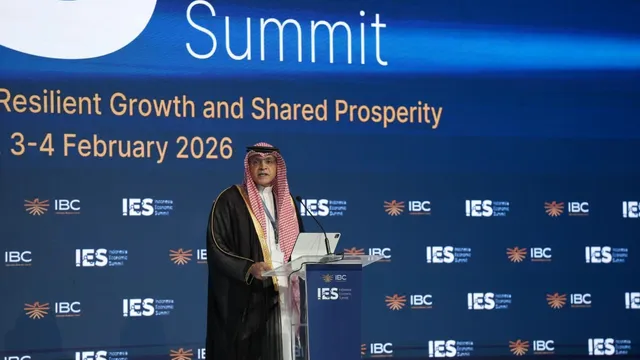
B57+ establishes headquarters in Asia-Pacific amid ongoing trade challenges
B57+ establishes headquarters in Asia-Pacific amid ongoing trade challenges
- B57+ Asia-Pacific Regional Headquarters established to facilitate economic collaboration.
- The initiative addresses trade gaps among Islamic countries, with only 20-22% of trade occurring intra-OIC.
- This marks a significant shift towards actionable economic partnerships in the Islamic world.
Story
On February 3, 2026, in Jakarta, Indonesia, an important development for economic integration was announced at the Indonesia Economic Summit. The establishment of the B57+ Asia-Pacific Regional Headquarters signifies a major step forward for the B57+ Business Leaders Initiative, which aims to promote economic collaboration among Islamic nations. Abdullah Saleh Kamel, President of the Islamic Chamber of Commerce and Development (ICCD), emphasized that the new regional headquarters would facilitate direct investment and partnerships between the private sector and government agencies. This initiative seeks to address trade and investment barriers among member states of the Organization of Islamic Cooperation (OIC). Despite possessing a significant population and resources, current intra-OIC trade constitutes only 20-22% of total traded values. Abdullah Saleh Kamel attributed these shortfalls to various structural challenges, such as regulatory disparities and insufficient engagement between the business community and policymakers. B57+ aims to bridge these gaps by fostering a durable platform for public-private partnerships. With its vision extending beyond OIC member states to countries with significant Muslim populations, it facilitates a comprehensive economic platform that includes global institutions aligned with Islamic economic principles. The initiative is intended to create an interconnected economic network, ideally promoting trade and investment across emerging markets. The establishment of the B57+ Asia-Pacific Headquarters is expected to catalyze a transformation in the role of the private sector within the Islamic economies, shifting from passive participation to active contribution in shaping impactful economic outcomes. By translating vision into tangible results, it aspires to enhance intra-OIC trade, create jobs, and promote shared prosperity.


