
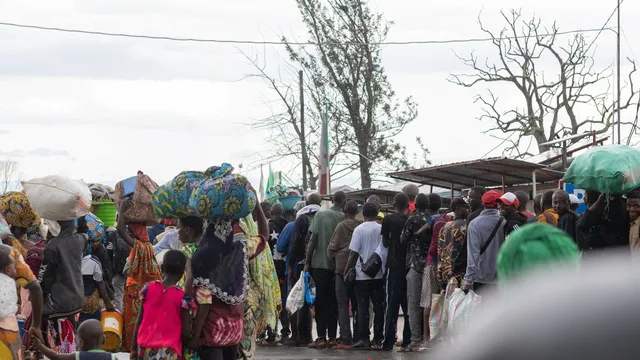
Health fears rise as 171 bodies found in mass graves in Congo
- Residents of Uvira discovered 171 bodies in mass graves following the withdrawal of M23 rebels.
- Local authorities have restricted access to the graves and limited public information.
- There is growing fear among residents about potential health risks due to decomposing bodies.
Story
In eastern Congo, concerns have escalated among residents of Uvira following the discovery of mass graves containing 171 decomposed bodies. This alarming finding came in the wake of the M23 rebel group's withdrawal from the city, with local residents becoming aware of the graves shortly thereafter. Flavien Kalenga Mutumishi, a nearby resident, reported discovering about a dozen poorly buried bodies and informed authorities of the potential health risks, particularly as one grave is situated in a residential compound. People living in the vicinity are worried that the decomposing bodies could pose a health hazard to the community, leading to increased calls for action from health workers. Civilians and civil society groups have criticized the government's handling of the situation, alleging restricted access to the mass graves and a ban on photographing them. Uvira's governor and local leaders contend that the M23 rebels executed the deceased individuals on suspicion of being affiliated with the Congolese army or pro-government militias. While both the M23 and Congolese military have faced accusations of extrajudicial killings, this incident adds to the already escalating humanitarian crisis in eastern Congo, where over 1,500 individuals have been reported killed and about 300,000 displaced due to ongoing conflict. Additionally, the United Nations Organization Stabilization Mission in the Democratic Republic of the Congo (MONUSCO) has expressed its inability to confirm the details surrounding the mass graves due to insufficient information. As the situation continues to unfold, experts and local authorities have urged more transparency and an in-depth investigation into the circumstances of these deaths. The conflict in eastern Congo remains complex, with over 100 armed groups operating in the region, underscoring the urgency for a sustainable peace agreement. The international community, including the United States, has raised concerns about the M23's resurgence, which reportedly has grown significantly in recent years. Despite efforts to broker peace between the Congolese and Rwandan governments and ongoing negotiations involving rebel groups, fighting persists across various fronts in the eastern regions of Congo, leading to further civilian and military casualties. The humanitarian implications of this latest discovery are severe, as health officials have yet to address the potential threats posed by the mass graves, thus adding to the growing fears of disease spread in an area already grappling with security and humanitarian crises.
Context
The humanitarian crisis in eastern Congo has reached alarming proportions in 2026, exacerbated by ongoing conflicts, economic instability, and widespread displacement of local populations. Since the early 1990s, this region has been plagued by violence, primarily driven by a complex interplay of local ethnic tensions, the presence of various armed groups, and the legacy of regional wars. Today, millions of individuals find themselves in dire straits as armed clashes continue to displace families, disrupt agricultural production, and impede humanitarian access. As of February 2026, reports indicate that over 5 million people are internally displaced, many living in overcrowded camps with minimal access to basic necessities such as clean water, food, and healthcare. This persistent displacement has created a vicious cycle where vulnerable populations remain exposed to violence and exploitation, further deteriorating their living conditions and well-being. The socio-economic impact of this crisis is profound. Widespread poverty and lack of infrastructure contribute to deteriorating health conditions, with outbreaks of diseases such as cholera and measles becoming increasingly common among displaced populations. Educational opportunities for children have also been severely limited, with many schools destroyed or repurposed for military use. In the context of a failing economy, local markets are struggling to function, leading to skyrocketing prices for food and essential goods. Humanitarian organizations report that the number of people in urgent need of assistance has vastly outpaced the available resources, with funding for aid operations remaining critically low. Food insecurity is reaching alarming levels, with millions facing the risk of malnutrition, especially among children and women, who bear the brunt of the crisis. The international response to the humanitarian crisis in eastern Congo remains inadequate. Despite various efforts from the United Nations and non-governmental organizations, access to affected areas is often restricted due to security threats and bureaucratic challenges. As a result, the delivery of life-saving aid continues to be hampered. There is a pressing need for a more robust international commitment to address not only the humanitarian needs but also the underlying causes of instability. Efforts must be directed toward fostering dialogue between warring factions, strengthening local governance, and supporting peacebuilding initiatives, while also ensuring that humanitarian access is guaranteed without interference. As the situation continues to unfold, the plight of the Congolese people remains a matter of urgent concern for the global community. Addressing the humanitarian crisis requires an integrated approach that encompasses immediate relief efforts while investing in long-term development strategies. The focus must be on empowering local communities, strengthening health and education systems, and rebuilding infrastructure. The international community's engagement is critical to end the cycle of violence and suffering in eastern Congo, providing the necessary support to achieve lasting peace and stability.
