

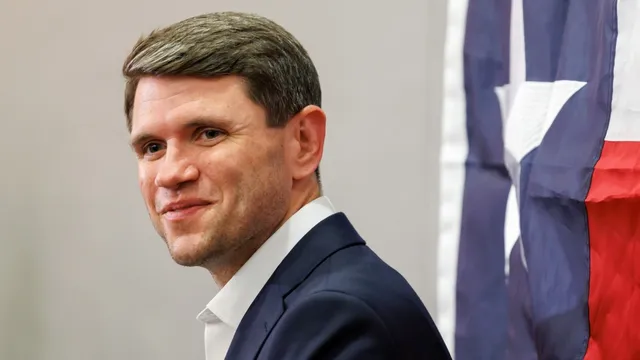
James Talarico acknowledges cringey comments while campaigning for Senate
James Talarico acknowledges cringey comments while campaigning for Senate
- James Talarico acknowledged that his previous comments on cultural issues were poorly expressed.
- GOP rival Ken Paxton has been using Talarico's past statements to undermine his candidacy, labeling him with mocking nicknames.
- Talarico's campaign focuses on tackling corruption while clarifying his standing on sensitive issues.
Story
In the contentious Texas U.S. Senate race, Democrat James Talarico, who is also a state representative, has publicly acknowledged that some of his prior statements on sensitive cultural issues 'missed the mark.' This revelation comes as he faces aggressive criticism from his GOP opponent, Ken Paxton, who utilizes Talarico's earlier comments to divert attention from his own controversial career, including recent impeachment proceedings. Talarico's remarks on the existence of multiple biological sexes and other topics have drawn mockery from Paxton in his campaign ads, labeling him with derogatory nicknames. Throughout his campaign, Talarico has forthrightly admitted that some of his past comments were poorly worded and have been contextually twisted by Paxton to deflect from the latter's political turmoil and allegations of corruption. During an NBC News interview, Talarico challenged the validity of Paxton's character and questioned his suitability for the Senate seat, emphasizing both his political platform and issues of integrity. He reiterated the importance of treating everyone with respect, particularly those within the LGBTQ+ community, while clarifying that he believes in two primary biological sexes despite acknowledging a small percentage of individuals with chromosomal differences. Throughout these discussions, Talarico aims to pivot the narrative from his perceived past missteps to Paxton's controversy-laden political history, underlining a broader theme of combating political corruption in the current election climate. This dynamic provides insight into the evolving nature of campaign rhetoric as both candidates prepare for an election that could carry significant implications for political representation in Texas.


