

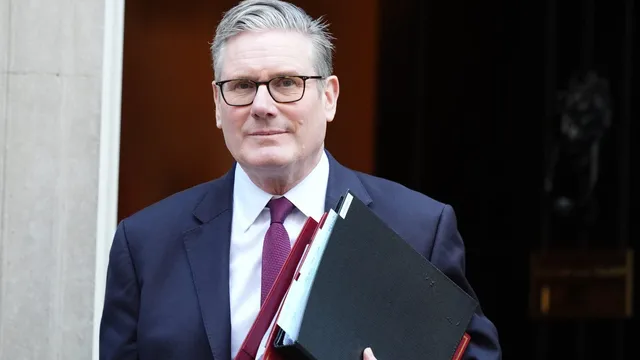
Starmer announces £53 million support for households amid Iran war crisis
Starmer announces £53 million support for households amid Iran war crisis
- Public opinion is divided, with 41% of voters dissatisfied with Sir Keir Starmer's response to the Iran conflict while 37% think he is handling it well.
- A majority of voters oppose UK military involvement in the Iran war and support actions to reduce energy prices.
- Starmer announced a £53 million support plan for households affected by rising energy costs due to the ongoing conflict.
Story
In the United Kingdom, public opinion is divided regarding Sir Keir Starmer's response to the ongoing conflict involving Iran, which escalated following recent military strikes by the US and Israel. Polls indicate that 41% of voters view Starmer's handling of the situation negatively, while 37% believe he has responded appropriately. Interestingly, a significant majority, measuring 59%, of Labour voters express support for Starmer's approach. There is widespread opposition to the UK joining military action against Iran, with 70% of voters resisting involvement in hostilities and only 17% advocating for participation. In the midst of escalating tensions, the UK government has allowed US forces to utilize British bases for defensive operations, yet Starmer cited that the UK would not engage in the wider war despite pressures from US President Donald Trump. Concurrently, a staggering 84% of voters indicated a desire for government action to reduce energy costs for all households, showing heightened concern over the impact of the conflict on living expenses. This was amidst rising energy prices triggered by the ongoing conflict. To address these economic challenges, Starmer announced a £53 million aid package targeting the most vulnerable households relying on heating oil, as they are not covered by the energy price cap in place until June.
Context
The ongoing conflict in Iran has had significant repercussions on global energy prices, particularly affecting the United Kingdom. As a pivotal player in global oil production, Iran's instability has resulted in more volatile oil markets. The disruption in supply chains and geopolitical tensions have led to spikes in crude oil prices, contributing to increased costs for consumers and industries reliant on energy in the UK. The instability around the Strait of Hormuz, a critical shipping lane for oil, further exacerbates these challenges, as any threats of blockade or conflict can lead to immediate price surges on the global stage. In addition to direct impacts on oil prices, the war in Iran has also influenced natural gas prices in the UK. As one of the largest consumers of natural gas in Europe, the UK finds itself susceptible to fluctuations resulting from disruptions in supply from the Middle East. While the UK has sought to diversify its energy sources, the interconnectedness of global energy markets means that price increases in one region can lead to knock-on effects throughout Europe. The increased costs are likely to be felt by households and businesses through higher energy bills, fueling concerns of inflation and economic strain. Furthermore, the UK's commitment to transitioning towards renewable energy presents a complex picture amid the chaos of a war in Iran. The conflict has made it more imperative for the UK to bolster its energy security by investing in alternative sources and reducing its dependency on oil and gas imports. However, this transition requires significant investment and time, during which the UK must continue to navigate high energy prices resulting from the ongoing conflict. The government and regulatory bodies must take steps to mitigate the impact on consumers, including exploring strategic reserves and establishing better trade relations with other oil-producing nations. In conclusion, the implications of the war in Iran on UK energy prices are multifaceted, intertwining regional instability with global energy dynamics. The ripple effects are felt across various sectors of the economy, impacting both consumers and businesses. As the UK grapples with rising energy costs, the urgency for a shift towards sustainable energy solutions must be balanced with immediate efforts to stabilize the market. Addressing both short-term challenges and long-term goals will be essential for the UK to navigate the complexities imposed by geopolitical conflicts and ensure energy security for its future.


