
politics
controversial
update

Senate Democrats block critical DHS funding during shutdown

Mar 19, 2026, 4:13 PM70
(Update: Mar 23, 2026, 2:28 PM)
vice president of the United States from 2017 to 2021
country in Western Asia
U.S. government body support agency

Senate Democrats block critical DHS funding during shutdown

  • The partial government shutdown of the Department of Homeland Security has now lasted over a month due to political disputes.
  • Democrats demand reforms to Immigration and Customs Enforcement while Republicans refuse to separate DHS funding for ICE.
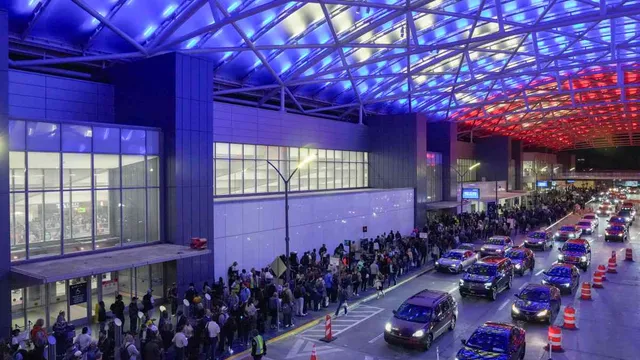
  • The ongoing standoff has sparked significant concerns about domestic security and the impact of TSA operational delays.
Share opinion
Tip: Add insight, not just a reaction
7

Story

In the United States, the partial shutdown of the Department of Homeland Security (DHS) has persisted for over a month due to a deadlock between congressional Democrats and Republicans. The shutdown began after Democrats refused to approve funding without substantial reforms to U.S. Immigration and Customs Enforcement (ICE). As concerns grew over domestic threats, notably following recent terror-style attacks, the urgency for DHS funding became increasingly apparent. Former Vice President Mike Pence condemned the Democrats' stance, labeling it 'unconscionable' in light of ongoing military actions against Iran and domestic security issues. Senate Republicans have maintained that the exclusion of ICE funding from any deal is unacceptable, asserting that the impasse jeopardizes crucial security operations. During the shutdown, essential DHS functions, including the Transportation Security Administration (TSA), have been affected, resulting in significant delays at airports across the country. As DHS staff work without pay, the pressure mounts on lawmakers to reach a resolution. Efforts to break the stalemate have involved various proposals aimed at isolated funding for non-ICE portions of DHS, but these have consistently met resistance from Republicans. Tensions in Washington, D.C., have escalated, with both parties blaming each other as airport wait times surge and security capacities wane. Key security officials have emphasized the need for resources to ensure public safety, reinforcing the argument that the ongoing shutdown is detrimental to national security. Despite the Republican's call for a comprehensive funding bill, Democrats have continued to push for reforms as a prerequisite for support. They argue that ongoing reforms to ICE's operations are necessary to safeguard both immigrant rights and public safety, claiming that the current state of affairs cannot continue. As travel-related chaos and national security fears coincide with a stalemate in negotiations, concerns about the broader implications of the shutdown for American safety escalate among lawmakers and the public alike.

Context

The Department of Homeland Security (DHS) plays a crucial role in ensuring national security through various initiatives aimed at preventing terrorism, securing borders, and enhancing cybersecurity. A shutdown of DHS funding has significant implications for national security, potentially compromising the resources and support necessary for effective threat mitigation. The DHS is responsible for managing several essential agencies such as the Federal Emergency Management Agency (FEMA), Customs and Border Protection (CBP), and the Transportation Security Administration (TSA). Without adequate funding, these agencies may face operational constraints that hinder their ability to respond to emergencies and protect critical infrastructure. In the absence of DHS funding, critical programs that focus on intelligence gathering and analysis, community outreach, and counterterrorism efforts could be severely affected. This could create vulnerabilities across the homeland security landscape. For instance, border security initiatives may experience delays in technology upgrades and personnel training, making the U.S. more susceptible to illegal crossings and smuggling operations. Additionally, joint task force projects aimed at combating terrorism might encounter setbacks, leading to gaps in actionable intelligence that could protect citizens and interests. Moreover, a funding impasse can harm the morale of DHS personnel, who play an indispensable role in safeguarding the nation. Uncertainty surrounding employment and resources can lead to decreased effectiveness and gaps in the workforce, ultimately diminishing the agency’s operational readiness and response capabilities. High turnover rates and a decline in motivated personnel can further exacerbate the threat landscape, as motivated individuals may seek employment elsewhere, leaving the agency with fewer experienced professionals. The implications of DHS funding shutdown stretch beyond immediate operational impacts. The perception of a weakened DHS may embolden adversaries, increasing the likelihood of attacks or exploitation of perceived vulnerabilities. It is vital to recognize that national security is a multilevel construct; disruptions in funding can ripple through local communities, affecting not only national but also regional and local law enforcement's ability to maintain public safety. As threats continue to evolve, it is paramount that DHS remains adequately funded to ensure continuous and confident national defense and public protection.

2026 All rights reserved
