
politics
controversial
provocative

Democratic secretaries demand clarity over controversial voter data usage

Nov 18, 2025, 1:00 AM30
(Update: Nov 20, 2025, 1:00 AM)
American lawyer and politician
American politician
United States federal department

Democratic secretaries demand clarity over controversial voter data usage

  • Ten Democratic secretaries of state have expressed concerns over how private voter data is being used by federal agencies.
  • These officials claim that there have been contradictory statements from the D.O.J. and D.H.S. regarding data sharing.
  • The officials are seeking transparency and clarity on the administration's intentions to restore trust in election processes.
Share your opinion
3

Story

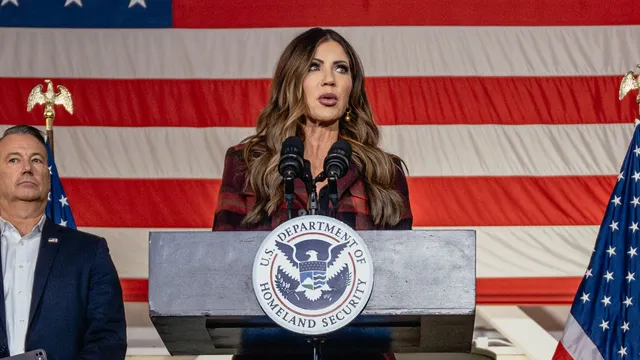
In recent developments, ten Democratic secretaries of state in the United States, representing various states, have expressed their concerns regarding the Trump administration's handling of voter data. Their demands arose from perceived inconsistencies in communication from the Department of Justice (D.O.J.) and the Department of Homeland Security (D.H.S.). In a letter addressed to Attorney General Pam Bondi and Homeland Security Secretary Kristi Noem, they raised issues regarding the sharing of voter information, specifically questioning whether the D.O.J. had, or intended to, share such data with other government agencies. These secretaries have highlighted their apprehension about how private voter data is being used, particularly in light of reports indicating potential misuse or misleading statements from federal officials. There have been conflicting messages during meetings held among state officials, where a D.O.J. representative indicated that voter information was being sought for the purpose of ensuring compliance with federal voting laws. Conversely, the D.H.S. had suggested that no such data had been received or requested. This discrepancy has caused alarm among the state officials, who believe transparent communication is crucial for rebuilding trust with federal agencies. Since the Trump administration's return to office, relationships between state election officials and the federal government have significantly shifted. The administration's prior initiatives to cut funding for programs designed to aid in cybersecurity for elections have raised eyebrows, leading to further distrust. Activists advocating for election reforms have claimed that attempts to access voter data could ultimately lead to unlawful purges of voters from voter lists, intensifying the stakes as the midterm elections approach. As the Democratic secretaries push for clarification on the use of voter data and the intentions behind federal requests, they demand thorough responses by December 1. Their collective action not only highlights the ongoing tension between state and federal authorities but also emphasizes the broader implications for voter rights and election integrity in the United States.

Context

The historical context of voter data privacy in the U.S. is rooted in a complex interplay between technological advancements, legal frameworks, and societal values. In the early years of American democracy, voter information was not systematically collected, and the act of voting was often a private affair. However, as the population grew and the need for organized elections emerged, states began to adopt methods for collecting and managing voter data. The introduction of voter registration systems in the 20th century marked a significant turning point, as it necessitated the collection of personal information that raised questions about privacy and security. With growing concerns about potential misuse of this data, various movements began advocating for stricter privacy protections to ensure that individual voters' information remained confidential and secure from unauthorized access or government overreach. Throughout the latter half of the 20th century, numerous legislative efforts aimed at protecting voter data were initiated. The Voting Rights Act of 1965 was pivotal, as it aimed not only to eliminate racial discrimination in voting but also to establish the principle that the privacy of voters was paramount. Subsequently, as technology evolved with the advent of computers and the internet, new vulnerabilities emerged, prompting further calls for stronger privacy protections. The Federal Election Commission (FEC) began implementing guidelines focused on safeguarding voter information, highlighting the balance that needed to be struck between transparency in the electoral process and the right to voter privacy. The digital age has introduced both opportunities and challenges for voter data privacy. With the rise of online voter registration and digital voting systems, the collection and storage of personal information have become more sophisticated. While these technologies have made voting more accessible, they have also made voter data more susceptible to breaches and misuse. In response, several states have enacted regulations aimed at bolstering voter privacy, including laws that govern how voter data can be shared and who has access to it. However, the patchwork nature of these laws across the U.S. raises ongoing concerns about the uniformity and effectiveness of voter data protection practices. In recent years, the conversation around voter data privacy has taken on new urgency, particularly in light of cyberattacks and foreign interference in elections. Advocacy groups and policymakers are increasingly recognizing that maintaining the integrity and confidentiality of voter information is crucial not only for protecting individual privacy but also for upholding public trust in the electoral process. As discussions about election security continue, it is clear that the historical context of voter data privacy will play a significant role in shaping future policies and best practices designed to protect voters in a rapidly changing technological landscape. To ensure that voter privacy remains a cornerstone of U.S. democracy, ongoing dialogue and legislative action are necessary to adapt to new threats while preserving the fundamental principles of transparency and accessibility.

2026 All rights reserved
