

Court decision brings deportation closer for activist Mahmoud Khalil
Court decision brings deportation closer for activist Mahmoud Khalil
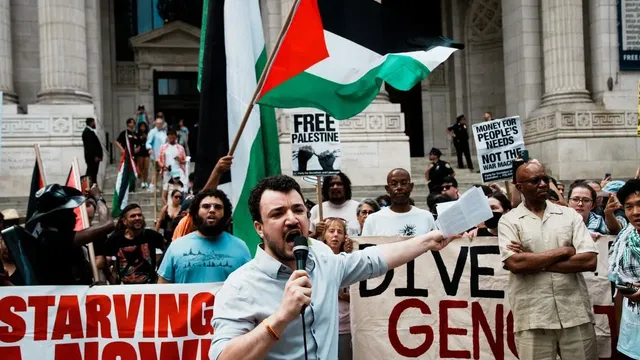
- Mahmoud Khalil was arrested by ICE agents during pro-Palestinian protests at Columbia University.
- The 3rd U.S. Circuit Court of Appeals ruled that a lower court lacked authority to release him from immigration detention.
- This ruling assists the government's aim to deport Khalil, reflecting ongoing tensions related to immigration and activism.
Story
In the United States, Mahmoud Khalil, a Palestinian activist known for his participation in pro-Palestinian protests, faced significant legal challenges following his arrest by Immigration and Customs Enforcement (ICE) agents on March 8, 2023. Khalil, a graduate student at Columbia University, was taken in front of his then-pregnant wife at their Manhattan residence, originally detained for allegations of 'antisemitic activities' during protests against Israel's military actions in Gaza. Despite not being charged with any crime, Khalil's green card was revoked, leading to his move to an immigration detention center in Louisiana, far from his home in New York City. Recently, a federal appeals panel determined that a lower court had no jurisdiction to release Khalil from detention, stating that immigration-related claims must be handled differently under existing laws. This ruling effectively reinstates the government's position to detain Khalil while pursuing deportation, marking a crucial point in the Trump administration's campaign against what has been perceived as foreign activists undermining U.S. foreign policy. Evidence suggests that Khalil was the first student targeted under this management's focused effort against foreign individuals involved in protest actions that could be deemed as opposing U.S. interests. The implications of this ruling serve not only to reinforce the legal framework governing immigration but may also impact the future of political activism on U.S. campuses. With the ruling indicating that Khalil must wait to seek relief through a formal appeal process, his predicament showcases ongoing tensions surrounding immigration laws, national security, and freedom of expression in the United States.
Context
The report investigates the policies and practices of Immigration and Customs Enforcement (ICE) regarding detainee treatment and detention protocols. ICE, as part of the Department of Homeland Security, is primarily responsible for enforcing immigration laws and managing immigration detention facilities. In recent years, scrutiny over ICE's practices has intensified due to concerns regarding human rights and the treatment of detainees during their time in custody. The report aims to illuminate the mechanisms by which ICE establishes its detention criteria and how these practices align with or diverge from established standards of humane treatment. The current detention policies are influenced by a mix of regulations, legal frameworks, and operational priorities. ICE utilizes a variety of facilities, including private prisons and local jails, leading to significant variability in conditions. These facilities are often criticized for overcrowding, inadequate medical care, and limited access to legal representation. Critiques of ICE practices emphasize the need for established guidelines on the minimum standards of care and to mitigate the risks of abuse and mistreatment, particularly for vulnerable populations such as minors and individuals with health issues. The report also examines the legal ramifications of prolonged detention and the impacts of recent executive orders aimed at increasing the enforcement of immigration laws. Additionally, the report considers the impact of policy changes and public opinion on ICE's operational strategies. Legislative changes, advocacy groups, and public awareness campaigns have influenced ICE's approach to detention. This includes discussions on the appropriateness of detention for specific populations and considerations for alternative methods to detention, such as community monitoring or bond systems, which have been promoted as more humane alternatives. It is essential to recognize the complex interplay between enforcement activities and the rights of individuals who are being held, particularly as legal battles continue around the appropriateness of immigration detention under U.S. law. Finally, the report underscores the importance of transparency, oversight, and accountability in ICE's detention practices. Calls for reform have been met with varying degrees of receptiveness from policymakers, and ongoing reporting on ICE's activities is critical for ensuring compliance with human rights standards. The recommendations made herein stress the need for comprehensive policy evaluations and the creation of independent oversight mechanisms to ensure that ICE operates within the bounds of legality and respects the dignity of all individuals in its custody.


