

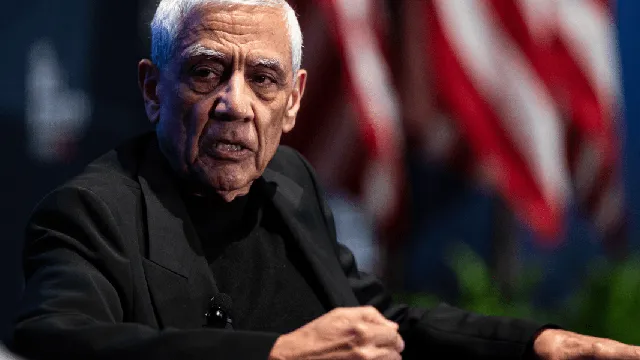
Vinod Khosla claims AI will take over most jobs in the future
Vinod Khosla claims AI will take over most jobs in the future
- Vinod Khosla believes that AI will dramatically change the job market especially for Gen Alpha, with many jobs becoming obsolete.
- Melinda French Gates encourages Gen Z graduates to critically evaluate their career paths post-graduation.
- Industry leaders advocate for a shift in focus from traditional employment to creativity and challenges in the workplace.
Story
In a recent episode of Fortune’s podcast, Vinod Khosla, a prominent figure in the tech industry and co-founder of Sun Microsystems, shared his evolving perspective on career advice, especially as it pertains to younger generations. As AI technology continues to advance and reshape the job landscape, Khosla expressed that the conventional wisdom of 'follow your passion' may be becoming increasingly impractical for today's students and young professionals. He believes that in 15 years, many will view this advice as outdated, especially given his projections that artificial intelligence could take over about 80% of current jobs, rendering traditional education routes less vital for financial stability. This shift in job dynamics highlights a profound change in how future generations might approach education and work. Khosla's perspective suggests an emerging reality where individuals may not need to pursue college degrees or traditional employment avenues to carve out successful careers. Instead, the focus may shift towards fostering creativity and innovation outside traditional career paths, as AI dramatically lowers labor costs and transforms the economy. His views reflect a broader concern among industry leaders regarding the need for the next generation to adapt to an unpredictable job market influenced by technological advancements. Aside from Khosla, other business leaders such as Melinda French Gates emphasize the importance of introspection among recent graduates. French Gates highlights that after graduation, young professionals should critically assess whether their career choices align with their long-term goals. She advocates for a proactive approach to navigating careers that resonates with personal values, amid the backdrop of a changing workplace culture where job-hopping is increasingly common. Additionally, industry executives like Lisa Su and Julie Sweet echo similar sentiments, encouraging youth to embrace challenges rather than shy away from them, as facing difficulties can lead to personal and professional growth. This collective viewpoint across leading figures suggests a vital transformation in how success is defined in an era where AI's impact continues to evolve rapidly. As the landscape changes, the notion of work, a career path, and the traditional job market itself may look vastly different in the not-so-distant future.
Context
The impact of artificial intelligence (AI) on the job market is a multifaceted issue that has garnered significant attention over recent years. As we advance further into the 21st century, the integration of AI technologies has led to pivotal changes across various industries, influencing how tasks are performed, altering job requirements, and even creating new roles. Automation powered by AI has been revolutionary in sectors like manufacturing, finance, and customer service, where repetitive tasks can be executed with greater efficiency and accuracy. Although this brings about improvements in productivity, concerns regarding job displacement have been a prevalent theme in discussions pertaining to AI's influence on employment. The types of jobs most susceptible to elimination are often those characterized by routine tasks, which AI is particularly adept at mastering, highlighting a significant transition in the nature of work demanded by modern economies. Despite the potential for displacement, it is important to recognize that AI also fosters job creation in unexpected ways. New roles are emerging that focus on managing, maintaining, and improving AI systems, thus requiring a workforce equipped with advanced technical skills. Jobs in areas such as data science, machine learning engineering, and AI ethics are gaining traction, illustrating a shift toward roles that emphasize human oversight and creativity in conjunction with automated processes. Furthermore, industries such as healthcare and education benefit from AI applications that augment human capabilities, enabling professionals to focus on complex problem-solving and interpersonal interactions rather than on mundane administrative responsibilities. The educational landscape must adapt to prepare the workforce for this evolving job market. Employers are increasingly valuing skills that complement AI technologies, such as critical thinking, emotional intelligence, and adaptability. Educational institutions, corporate training programs, and governments have a shared responsibility to cultivate these skills through relevant curricula and ongoing training. As societies adapt to AI-driven changes, lifelong learning will become a key tenet of career development, ensuring that individuals remain competitive in increasingly automated job markets. Without a concerted effort to upskill workers, the gap between those equipped to thrive in an AI-enhanced environment and those left behind could widen, exacerbating existing inequalities. In conclusion, the impact of AI on the job market is complex, encompassing both opportunities and challenges. While automation presents the risk of job displacement in certain sectors, it simultaneously paves the way for new career paths and enhances existing roles. The responsibility lies with all stakeholders to adapt to these transformations through education, training, and policy measures that support a balanced approach to technological integration. By understanding and addressing the repercussions of AI on employment, we can strive for a future in which technology and human labor coexist harmoniously, driving innovation and economic growth.


