

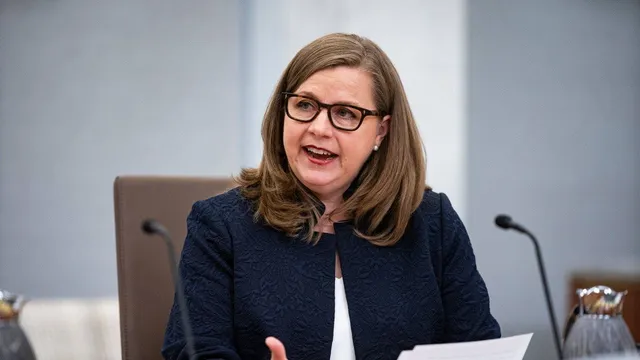
Bowman anticipates major interest rate cuts by year-end
Bowman anticipates major interest rate cuts by year-end
- Michelle Bowman has written in projections for three interest rate cuts before the end of 2026.
- The FOMC recently held the benchmark federal funds rate steady after previously cutting rates.
- There is ongoing concern about labor market conditions and the potential impact of external factors on economic growth.
Story
In an interview on Friday, March 20, 2026, Federal Reserve Vice Chair for Supervision Michelle Bowman articulated her view on the current economic landscape and monetary policy. Despite being viewed as one of the more hawkish members of the Federal Open Market Committee (FOMC), Bowman has expressed concerns about the job market and believes it requires some recovery. To support labor market improvement, she has written in her projections for three cuts in interest rates before the calendar year ends. During her appearance on FOX Business Network's 'Mornings with Maria,' she emphasized the need to observe the job market's progress, which aligns with her cautious yet optimistic economic outlook for the year ahead. The FOMC recently decided at their meeting on Wednesday to keep the benchmark federal funds rate steady in the range of 3.5% to 3.75%. This decision marked the second consecutive meeting where interest rates remained unchanged. The FOMC had previously cut rates by 25 basis points three times in late 2025 and has projected only one more rate cut for the remainder of this year, according to recent economic assessments. Despite the decision to hold rates steady, Bowman argues that the potential for rate cuts is necessary in light of current labor market conditions. Additionally, Federal Reserve Chair Jerome Powell spoke about the median projections from the FOMC participants, which found that they anticipate only minimal cuts in interest rates moving forward, reflecting their collective assessment of the economy. Although inflation projections are higher, Powell expressed optimism regarding progress on inflation as the year progresses. Tariff-related adjustments are seen as pivotal to this outlook, suggesting that ongoing external economic factors are influencing domestic policy decisions. The uncertainty surrounding the geopolitical situation, particularly the conflict in the Middle East, is also impacting national economic forecasts and Federal Reserve planning. Ultimately, the resolution of labor market issues and external risks will play a critical role in determining the Federal Reserve's actions regarding interest rates. Bowman's forward-looking stance highlights the dual imperatives of fostering economic growth while navigating challenges like inflation and geopolitical tensions. As the situation evolves, both Bowman and Powell emphasize the importance of adaptability in monetary policy amid ongoing uncertainties.


