
politics
controversial
provocative

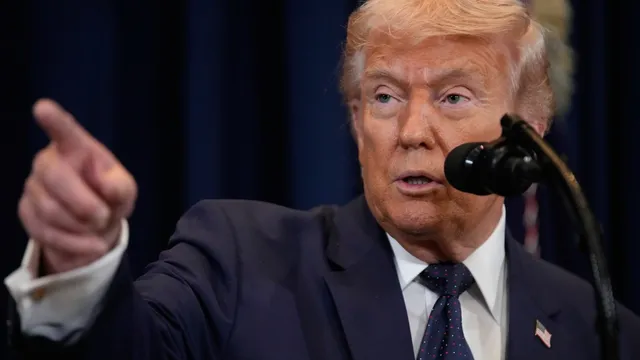
Trump's cardboard ayatollah video goes viral amid Iran war

Mar 11, 2026, 11:26 AM50
(Update: Mar 12, 2026, 9:05 PM)
president of the United States from 2017 to 2021
triniTY me no DNA da Patrick Hampton case Asus is Asus immortals sold in sync American conservative cable television news channel
office of the President of the United States in the White House

Trump's cardboard ayatollah video goes viral amid Iran war

  • A viral video featuring Donald Trump showcasing a cardboard cut-out of Iran's new Supreme Leader has drawn significant attention on social media.
  • The mix of serious military conflict and comical video contents highlights a trend of using humor to frame public perception during wartime.
  • Critics have expressed concern that trivializing warfare through memes and lighthearted videos disrespects the realities faced by those involved.
Share your opinion
5

Story

In early 2025, a fake video featuring Donald Trump was widely shared on social media, showcasing him revealing a cardboard cut-out of Iran's new Supreme Leader, Mojtaba Khamenei, in the Oval Office. This mock-up, styled after a prior Fox News segment, captured considerable attention, illustrating how memes can distort public perception, particularly during wartime. Concurrently, Israel and the U.S. engaged in coordinated military actions against Iran's nuclear capabilities, inciting backlash and fostering misinformation through visual media. The relevance of speech bubbles emerging from the video reflects the need for critical consumption of information amid ongoing conflicts and global tensions. Another interesting angle unveiled during this period was the release of an AI-generated video of Mojtaba Khamenei by Dan Scavino, which was also shared online. This particular post featured Khamenei cut-outs being printed while backed by the song "What's Up?" by 4 Non Blondes, reinforcing the trend of music and imagery merging with political narratives to create a comedic but potentially misleading representation of serious issues. The release of such videos showcases a strategy aimed at engaging younger audiences and framing the war in a light-hearted manner, thereby minimizing the gravity of the situation. Additionally, there was significant criticism directed at the White House for utilizing cartoonish elements in videos promoting military actions. One notable example involved a bowling video that became a focal point for social media outrage, labeled as cringeworthy and disrespectful. Critics have noted that juxtaposing conflict with sports or gaming imagery trivializes the real violence and human suffering experienced during war, resulting in widespread condemnation from various quarters. The content shared through these channels not only reflects an evolution in government messaging tactics but also highlights the challenges of maintaining integrity in communication as conflicts intensify. As memes and videos proliferate, the obligation of both creators and consumers to discern reality from parody becomes critical, especially as misinformation can alter perceptions during key geopolitical moments. The approach adopted by officials illustrates a fundamental struggle as they balance offense with public response, aiming to galvanize support while facing considerable dissent regarding military actions taken against Iran.

Context

The impact of memes on social media during conflicts has shown to be significant in shaping public perception, spreading information, and mobilizing movements. In contemporary society, social media platforms have become vital spaces for communication, particularly during times of crisis. Memes, which convey humor and often poignant commentary through images and text, serve as powerful tools for both information dissemination and emotional expression. They encapsulate complex messages in an easily digestible format, allowing large audiences to engage with difficult topics surrounding conflicts, including war, protests, and social justice movements. As such, memes not only reflect the zeitgeist but also actively participate in the narrative surrounding events as they unfold in real-time. During conflicts, memes can play a dual role: they can be used as propaganda or as tools for resistance. On the one hand, state and non-state actors can create memes that support specific ideological narratives, attempting to sway public opinion or demonize an opponent. These memetic campaigns can be strategically deployed to create a sense of urgency or fear, potentially mobilizing supporters through emotional engagement. On the other hand, individuals and activist groups use memes to challenge dominant narratives and call attention to injustices. This latter use has been particularly notable in movements like Black Lives Matter and various global protests against oppressive regimes, where memes have highlighted systemic issues and mobilized solidarity across borders. The viral nature of memes means they can transcend linguistic and cultural barriers, making them particularly effective in a globalized digital landscape. Their ability to be shared quickly allows for grassroots movements to gain visibility and traction. For instance, during the Arab Spring, memes played a role in communicating revolutionary sentiment and rallying support. As people could easily share and adapt memes, they cultivated a shared culture of resistance against authoritarianism. Furthermore, educational institutions and NGOs have started employing memes as tools for engagement and awareness, illustrating the versatility of this medium in conflict-ridden contexts. However, the impact of memes in social media is not without challenges. The same characteristics that allow memes to circulate widely also enable the spread of misinformation and divisive content. The speed at which memes can disseminate means that false narratives can gain traction quickly, complicating the informational landscape during conflicts. This underscores the importance of media literacy among social media users, as understanding the context and intent behind memes is crucial for navigating their impact. In summary, memes are an important element of social media's role in conflicts, but their capacity to influence public opinion and propagate messages requires careful consideration of their evolving nature and implications.

2026 All rights reserved
