
military conflicts
provocative
impactful

U.S. military builds naval presence near Iran over nuclear threats

Feb 20, 2026, 11:15 AM10
(Update: Feb 20, 2026, 11:15 AM)
country primarily in North America
country in Western Asia
geopolitical region encompassing Egypt and most of Western Asia, including Iran
president of the United States from 2017 to 2021
extension of the Indian Ocean
region of Turkey

U.S. military builds naval presence near Iran over nuclear threats

  • The U.S. military has mobilized significant naval forces in the Middle East to address concerns over Iran's nuclear program.
  • Key assets include the USS Gerald R. Ford carrier and destroyers positioned to defend strategic waterways.
  • This military presence symbolizes America's commitment to exert pressure on Iran while preparing for potential military action.
Share your opinion
1

Story

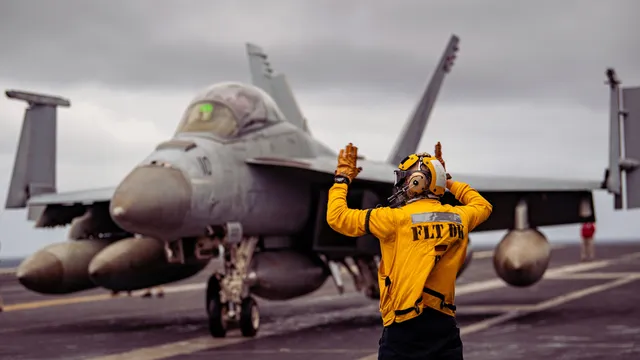
In recent weeks, the United States has significantly increased its military presence in the Middle East, particularly near Iran. This buildup includes the deployment of the USS Gerald R. Ford, the largest aircraft carrier in the world, alongside other naval vessels. The movement of these forces corresponds with ongoing indirect negotiations between Washington and Tehran centered around Iran's disputed nuclear program. President Donald Trump has issued firm warnings that the Iranian regime must dismantle its nuclear infrastructure or face serious consequences. The USS Abraham Lincoln, another carrier strike group, stands ready to launch precision strikes if needed. Further supporting military operations are U.S. destroyers stationed in the Eastern Mediterranean, including the USS Bulkeley and USS Roosevelt, which provide missile defense and assist Israel against potential Iranian counterattacks. These naval movements are crucial given the strategic importance of the Strait of Hormuz, where a significant portion of the world's oil passes daily. The presence of U.S. destroyers like the USS McFaul and USS Mitscher ensures both the defense of this key maritime route and the ability to strike Iranian military targets quickly. In addition to naval resources, the U.S. air power is extensively deployed across multiple air bases in the region. Various aircraft, including F-35 fighters and KC-135 tankers, contribute to the military's operational reach. The American military's capabilities are enhanced by a network of support aircraft for reconnaissance and mid-air refueling, which helps sustain extended operations. This sophisticated combination of air and naval assets grants commanders a versatile approach in addressing both defense and offensive strategies. Ultimately, the coordinated deployment of U.S. military assets signifies an escalation in tensions with Iran. By projecting strength through this buildup, the U.S. aims to influence Tehran's negotiations regarding its nuclear ambitions while simultaneously preparing for the possibility of a military confrontation. The situation remains delicate as both sides navigate these complex and potentially volatile dynamics.

2026 All rights reserved
