

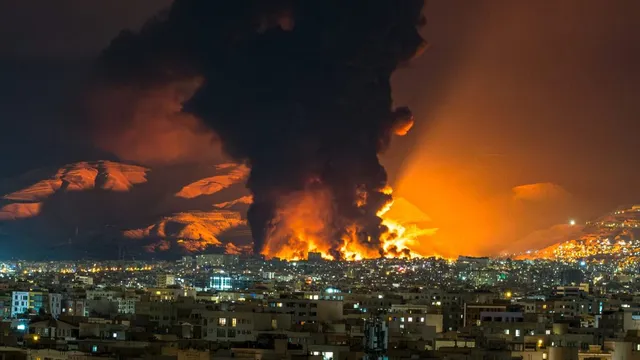
Iran launches attacks on ships and targets Dubai International Airport
Iran launches attacks on ships and targets Dubai International Airport
- Iran launched attacks on commercial ships and targeted Dubai International Airport amid escalated tensions.
- This military escalation comes as a response to sustained airstrikes from American and Israeli forces.
- The situation highlights a significant threat to regional stability and global energy security.
Story
In recent developments, Iran escalated tensions in the region by attacking commercial ships and targeting Dubai International Airport. These incidents occurred as a response to ongoing American and Israeli airstrikes that have been directed at the Islamic Republic since the conflict renewed on February 28. In these confrontations, Iranian forces claimed responsibility for firing upon vessels across the Persian Gulf and specifically targeting strategic locations in the UAE, notably Dubai. This aggression represents a continued effort by Iran to assert its regional influence and disrupt international shipping routes within the oil-rich region. As the situation intensified, Iran’s military command announced its intention to target banks and financial institutions in the Middle East, particularly putting Dubai at risk, given its status as a hub for numerous international financial entities. Reports indicated that Iranian drones were deployed in areas near Dubai International Airport, leading to concerns about the safety of air traffic and heightened global energy insecurity. Notably, this escalation coincided with intense aerial attacks from Israeli forces on both Iran and Iran-backed Hezbollah militants positioned in Lebanon. The fallout from these military actions has contributed to significant disruptions in cargo traffic, particularly through the Strait of Hormuz, a critical maritime corridor that accounts for about one-fifth of the world’s oil trade. Iranian authorities have effectively managed to halt most cargo movements in the strait and declared that they would continue their military operations to leverage pressure on the United States and its allies to cease hostilities. As global energy prices spiked, the international community, including the International Energy Agency, began to intervene by releasing emergency oil reserves to address the potential crisis. Public sentiment in the affected regions is tense, with both sides of the conflict remaining resolute. Israel issued warnings regarding potential Iranian attacks, yet there have been no immediate reports of casualties. Diplomatic efforts continue as the United Nations Security Council deliberated on resolutions aimed at addressing the escalating crisis, with Iran’s isolation becoming increasingly evident in international discourse. This strategic rivalry has not only destabilized the region but also posed severe implications for global energy markets and safety along critical international trade routes.
Context
analysis economic data trends economic analysis economic geopolitical policy geopolitical trends trends geopolitical market impact economic global policy global trends global impact strategic shift insight market data policy impact geopolitical policy strategic policy data policy economic analysis shift market data geopolitical insight policy data insight impact global strategic trends economic policy shift insight policy impact trends strategic insight analysis strategic economic data data policy global geopolitical trends strategic policy data geopolitical strategic trends insight strategic strategic shift analysis geopolitical trends...


