In a significant announcement, OpenAI revealed plans to invest $750 billion in infrastructure by the year 2030. This figure represents a 25% increase from earlier estimates made in the same year. The investment is primarily aimed at enhancing the company's data center capabilities, which are crucial for its AI operations. The first major project under this initiative is Project Camellia, a $20 billion data center campus located in Georgia, covering 1,400 acres northwest of Savannah. This facility is expected to draw a substantial amount of power, approximately 3.2 gigawatts, from Georgia Power, the local utility provider.
The timeline for the availability of this power is projected between 2028 and 2032. OpenAI has committed to covering all costs associated with the infrastructure and electric service for the new data center. In a move to support the local economy, Effingham County has granted OpenAI a 50% property tax abatement for a period of 15 years. This financial incentive is part of a broader strategy to attract tech companies to the region, which is becoming increasingly important as demand for AI capabilities grows.
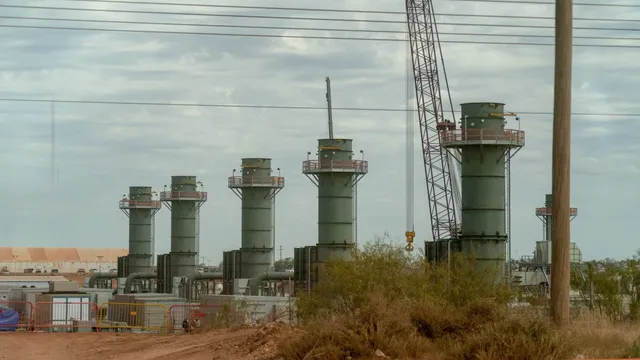
Georgia Power has indicated that the new power capacity will primarily come from natural gas, with plans to build or acquire about 5.8 gigawatts of generating capacity. This expansion will more than double the utility's existing natural gas fleet. However, there are concerns regarding the environmental impact of relying on fossil fuels, as a portion of the new capacity will come from less efficient simple-cycle turbines. In addition to natural gas, the energy supply will also include grid-scale batteries and solar power, reflecting a mixed approach to energy sourcing.
While the electricity from Georgia Power is expected to start flowing in 2028, OpenAI has not provided a specific timeline for when the first GPU will be operational at the new data center. The company recently appointed Brett Mayo, a former employee of xAI, to oversee the construction of the data center, which may expedite the process. As OpenAI continues to expand its infrastructure, the implications for the AI industry and the local economy are significant, raising questions about sustainability and the future of energy consumption in tech development.