

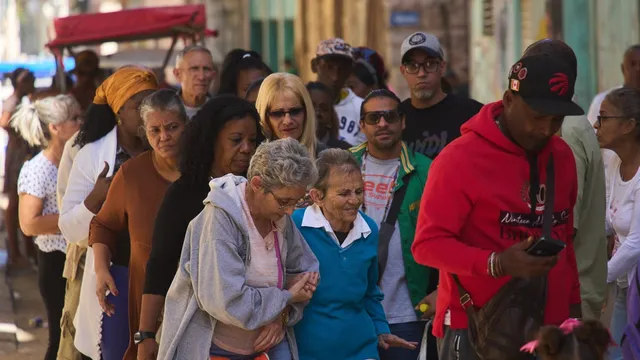
Cuban peso plunges to record low in informal markets
Cuban peso plunges to record low in informal markets
- The Cuban peso hit an all-time low of 500 pesos against the US dollar in the informal market, significantly lower than the 400 pesos registered last summer.
- The economic crisis in Cuba has been exacerbated by the Trump administration's sanctions and restrictions on oil imports, leading to a cut-off from its major ally, Venezuela.
- Residents of Cuba are increasingly struggling to cope with economic hardship as essential services are scaled back, making living conditions dire.
Story
In Cuba, the economy has faced severe challenges resulting in the Cuban peso hitting an all-time low against the US dollar in the informal market. This significant drop to 500 pesos per dollar marks a deterioration from about 400 pesos just last summer, reflecting a worsening economic crisis. The independent news site El Toque, which monitors these rates, indicates a growing reliance on informal exchange as the official system remains complex and less understood by the general populace, who often find themselves negotiating rates in WhatsApp groups or with neighbors. This plunge in currency value began intensifying after a US military operation in Venezuela that resulted in the ousting of former President Nicolás Maduro. Following this event, US President Donald Trump announced that Venezuela would cease oil exports to Cuba, taking away a crucial energy ally for the island nation. The the Cuban economy has been further choked by additional sanctions, including threats to impose tariffs on countries supplying fuel to Cuba. The situation worsened as Mexico reduce fuel shipments to the island, while still providing other forms of aid. This economic distress has made it increasingly difficult for residents to live, as everyday transactions depend more on informal markets where the peso loses its value daily. In response to the urgent economic crisis, Cuban authorities have started selling limited amounts of gasoline for dollars and other foreign currencies, while public transportation services in Havana face severe cuts. Moreover, a rise in blackouts has been noted, and banks have shortened their operating hours. Many cultural events have been canceled, and remote learning has become more prevalent due to the ongoing crisis, affecting both education and daily life. As a result, the economy has become increasingly dollarized, leading to many goods being sold in US dollars, despite most residents lacking stable dollar incomes, further contributing to an already dire situation.
Context
The impact of US sanctions on the Cuban economy has been profound and multifaceted, affecting nearly every sector of Cuban life. The sanctions, which were first imposed in the early 1960s, aimed to economically isolate the island as a means to weaken the communist government. Over the decades, amendments and the enforcement of various policies have further entrenched the embargo, leading to severe limitations on trade, investment, and access to essential goods. These restrictions have had dire consequences for Cuba's economy, contributing to food shortages, limited healthcare resources, and a general decline in living standards. As a result, the country has grappled with high levels of unemployment and inflation, severely affecting the populace's quality of life. Cuban agriculture, once robust, has suffered significantly under the weight of US sanctions. The limitations on imports of agricultural machinery, fertilizers, and food goods have hampered productivity and led to a reliance on imports from other nations, often at a higher cost. Consequently, many farmers struggle to produce sufficient food for the population, resulting in a system plagued by food insecurity and rising prices. This agricultural decline is emblematic of broader economic stagnation, as Cuba has faced challenges in diversifying its economy and attracting foreign investment. The inability to engage freely in international trade further exacerbates these challenges, reducing potential economic growth and development. Healthcare is another sector severely impacted by the embargo. Although Cuba is known for its healthcare system, the restrictions have hindered access to medical supplies and technologies. Pharmaceutical companies and medical equipment suppliers from the United States cannot export their products to Cuba, leading to shortages of vital medicines and healthcare supplies. The Cuban government has often been forced to find alternative sources, which can be more expensive and less reliable. This situation has raised questions about the long-term sustainability of the healthcare system, as the quality of care may diminish due to insufficient resources. In summary, the US sanctions on Cuba have created a challenging economic environment that affects various sectors, most notably agriculture and healthcare. The ongoing embargo continues to limit Cuba's ability to integrate into the global economy, stifling growth, innovation, and development. As international relations evolve, the potential for reform or relief from the sanctions will be pivotal in determining Cuba's economic future. The resilience of the Cuban people amid these challenges, bolstered by a rich cultural heritage and commitment to social welfare, remains a critical factor in navigating the complexities posed by continued US sanctions.


