

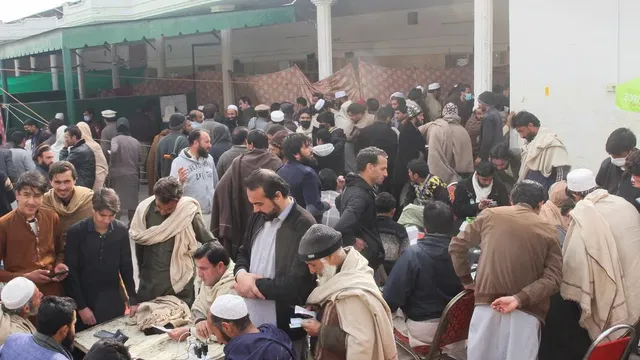
Thousands flee Tirah Valley amid evacuation warnings
Thousands flee Tirah Valley amid evacuation warnings
- Residents of the Tirah Valley left their homes due to warnings from local mosques about potential military action.
- Despite the lack of formal government evacuation orders, local officials reported thousands of families fleeing to nearby towns.
- The situation reflects long-standing security issues in the region, as residents seek safety amidst harsh winter conditions.
Story
Residents of the Tirah Valley in Pakistan's Khyber Pakhtunkhwa province have moved to nearby towns due to announcements from local mosques warning of possible military action. This exodus occurred against a backdrop of heavy snowfall and harsh winter temperatures, complicating the evacuation process. Although the Pakistani government has not announced any formal evacuation or military operation, local officials indicated that thousands of families are being registered for assistance after fleeing their homes. Notably, the Tirah Valley has long been a sensitive area prone to conflict, being a stronghold for the Tehrik-e-Taliban Pakistan, an Islamist militant group known for attacking security forces. On January 27, 2026, Pakistan's Defence Minister Khawaja Muhammad Asif denied that any military operation was planned in the region, characterizing the movement of residents as a routine seasonal migration driven by winter conditions. Nevertheless, sources within the military, speaking anonymously, suggested that the evacuations were related to recent consultations with tribal elders and security authorities regarding the presence of militants among civilians. They stated that civilians had been encouraged to leave temporarily to mitigate the risk of harm as targeted operations continued in the area. Confusion and disagreement have arisen among local officials and government authorities regarding the circumstances fueling this evacuation. The Chief Minister of Khyber Pakhtunkhwa, Sohail Afridi, claimed that his government had not been involved in the decisions made behind closed doors and labeled the relocations as forced displacements rather than voluntary decisions. Residents like Mr. Abdur Rahim expressed frustration at the situation, recalling that they lived in the area for years and were not leaving due to the winter conditions, but rather because of explicit evacuation announcements made in mosques. The journey to safety was fraught with difficulties, as families encountered food shortages and impassable snow-covered roads, further complicating the evacuation. Shopkeeper Mr. Gul Afridi described the ordeal his family faced, which took nearly a week, amidst the compounded challenges of extreme winter weather. This situation highlights the precarious balance between security concerns and civilian safety in a region marked by longstanding instability.


