

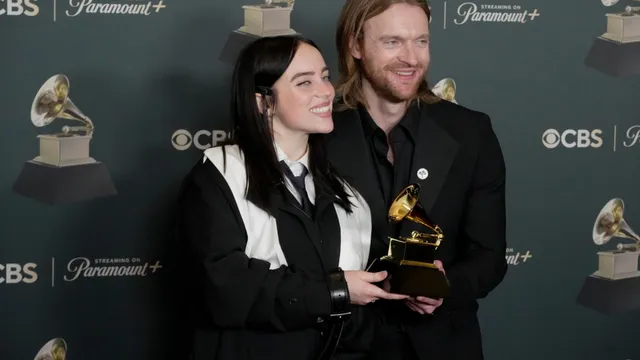
Billie Eilish criticized for linking Grammy speech to stolen land
Billie Eilish criticized for linking Grammy speech to stolen land
- Billie Eilish made a controversial statement at the Grammy Awards about land ownership and immigration.
- Her comments drew criticism due to her home being on land claimed by the Tongva tribe.
- The backlash highlights the broader issue of celebrity activism and responsibility concerning inherited privilege.
Story
In recent days, Billie Eilish has ignited controversy following her acceptance speech at the 68th Grammy Awards held in Los Angeles, where she won the Song of the Year award. During her speech, Eilish made a political statement, declaring that 'no one is illegal on stolen land' while also displaying an 'ICE OUT' pin to protest against Immigration and Customs Enforcement (ICE). This statement has faced scrutiny due to her ownership of a multimillion-dollar mansion in Los Angeles, which the Tongva tribe claims is situated on their ancestral territory. The Tongva tribe, the original inhabitants of the greater Los Angeles basin, publicly responded to Eilish's remarks. A spokesperson mentioned that while they appreciate her bringing attention to the history of the land, she has not reached out to them directly about her property. Additionally, they expressed hope for clearer recognition of their tribe in future discussions about the territory. This situation has led to various criticisms and memes online, highlighting perceived hypocrisy in her activism compared to the comforts of her lifestyle. Prominent figures, including politicians and media personalities, have rebuked Eilish’s comments, suggesting that individuals advocating for such issues should take action to rectify their privilege regarding land ownership. Critics included Minnesota state Rep. Walter Hudson, who suggested that Eilish should consider returning her property to the tribe, and Sen. Mike Lee from Utah, who questioned her sincerity in championing her anti-ICE stance. Criticism extended beyond social media, with some commentators stressing the need for entertainers to avoid political commentary during performances. Kevin O'Leary, a noted investor, warned celebrities about the potential backlash they face when speaking out on political issues at public events, pointing to the risk of alienating fans. Amidst this turmoil, Billie Eilish's brand and public persona stand at a pivotal point as she navigates the balance between activism and her career in entertainment, highlighting broader tensions between celebrity culture and social responsibility.
Context
Celebrity activism refers to the engagement of fame and public figures in social, political, and humanitarian causes, utilizing their platform to effect change and raise awareness. This phenomenon has grown significantly over the past few decades, with numerous celebrities taking visible stances on pressing global issues such as climate change, human rights, and social justice. Their influence, amplified by social media, has enabled them to reach a vast audience, potentially mobilizing support and fostering a sense of accountability within their fanbase and beyond. However, the effectiveness and authenticity of celebrity activism remain topics of debate, as not all actions are perceived as genuine or impactful. The critique of celebrity activism often hinges on the concept of accountability. Celebrities wield substantial social capital, and when they champion causes, the expectations for them to follow through with sustained engagement and genuine advocacy can be high. Many organizations and activists have voiced concerns about the transient nature of celebrity involvement, suggesting that when these figures engage only temporarily or superficially, it risks minimizing the seriousness of the issues at hand. Moreover, critics argue that some celebrities may prioritize publicity over substantial contributions, thus undermining their role as advocates for meaningful change. Despite the complexities surrounding celebrity activism, several instances demonstrate how public figures can indeed wield their influence in ways that foster real change. Notably, the involvement of celebrities in fundraising efforts and awareness campaigns for various causes has raised significant sums of money and pulled attention to issues that may otherwise not receive adequate visibility. For example, athletes, actors, and musicians have successfully partnered with non-profit organizations to bring issues like mental health and educational inequality to the forefront of public discourse, prompting actions from policymakers and the general public alike. In conclusion, while celebrity activism brings both benefits and criticisms, its potential to create awareness and action cannot be dismissed. Accountability remains paramount—celebrities must strive for genuine involvement in the causes they advocate. This involves committing to continuous engagement rather than fleeting appearances. If they can navigate this delicate balance, celebrity activism can serve as a powerful tool for social change and inspire accountability not only among their followers but also within the industries in which they operate.


