

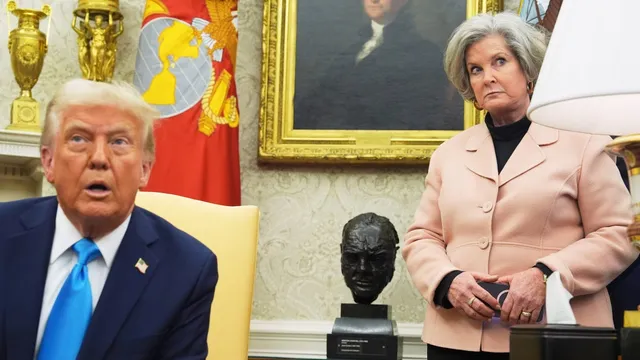
Susie Wiles claims Trump exhibits an alcoholic's personality traits
Susie Wiles claims Trump exhibits an alcoholic's personality traits
- Susie Wiles described Donald Trump's personality as akin to that of an alcoholic during a lengthy interview.
- The article, which included various controversial claims, faced accusations of being a hit piece.
- The fallout from this publication has intensified discussions about personality and leadership in politics.
Story
In the United States, White House Chief of Staff Susie Wiles made headlines following an extensive interview with Vanity Fair, where she described Donald Trump as having personality traits typical of an alcoholic. Over the course of eleven months, journalist Chris Whipple conducted numerous interviews with Wiles, leading to the publication of a piece that stirred significant controversy. Wiles asserted that Trump operates under the belief that there is nothing he cannot achieve, drawing a parallel between his behavior and that of individuals grappling with alcohol addiction, even though Trump himself does not consume alcohol. Wiles's comments ignited discussions about the nature of leadership and personality traits associated with individuals in positions of power. In her remarks, she also accused tech billionaire Elon Musk of heavy drug use, specifically ketamine, and labeled Republican candidate JD Vance a conspiracy theorist. As a response to the backlash over the interview, Wiles expressed her dissatisfaction by branding the article a 'disingenuously framed hit piece', claiming that essential context was omitted to portray a negative narrative about Trump and her team. Whipple defended his work by emphasizing the authenticity of the statements made during their recorded discussions, reiterating that the facts laid out in the piece have not been challenged. Trump, known for being teetotal, surprisingly came to Wiles's defense, expressing his agreement with her portrayal of his personality traits while dismissing the article's claims regarding the interview process as misguided. Vance echoed Wiles's defense, showcasing a level of camaraderie despite being labeled a conspiracy theorist. The fallout from Wiles's interview has raised questions about the nature of political narratives and the characterizations of those within the upper echelons of power. It also highlights how public perceptions of personality can influence political dynamics and the stark responses from high-profile individuals facing scrutiny. Both Wiles's characterization of Trump and the resultant dialogue reflect broader societal conversations about leadership, addiction, and the psychological profiles of influential figures in politics.


