
military conflicts
controversial
provocative

Israeli soldier vandalizes Jesus statue, Netanyahu responds

Apr 20, 2026, 1:26 PM30
(Update: Apr 21, 2026, 5:03 PM)
sovereign state in Western Asia
central figure of Christianity (6 or 4 BC – AD 30 or 33)
country in Western Asia

Israeli soldier vandalizes Jesus statue, Netanyahu responds

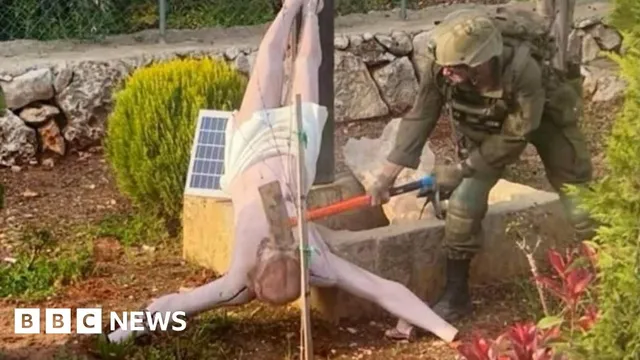
  • An Israeli soldier was photographed vandalizing a statue of Jesus in southern Lebanon, leading to widespread condemnation.
  • Israeli leaders, including Prime Minister Netanyahu, expressed strong regret over the incident, with promises of restoration and accountability.
  • The situation highlights ongoing tensions between Israel and Lebanon and raises concerns about interfaith relations in the region.
Share opinion
Tip: Add insight, not just a reaction
3

Story

In southern Lebanon, an Israeli soldier was photographed vandalizing a statue of Jesus Christ. The image captured the soldier apparently striking the statue with a sledgehammer, igniting a wave of outrage across various platforms and among global leaders. Prime Minister Benjamin Netanyahu expressed his shock, stating he was 'stunned and saddened' by the incident and condemned the action in the strongest terms. The Israeli military also deemed the soldier's actions as unacceptable, emphasizing their commitment to upholding values that do not tolerate such behavior. They swiftly communicated plans to assist in the statue's restoration, recognizing the importance of the religious symbol to the local community. In context, the events unfolded during a precarious ten-day ceasefire between Israel and Lebanon, amidst ongoing military operations initiated by Israel in response to attacks from Hezbollah. This conflict has already displaced over 1 million people in Lebanon and led to significant casualties. The Christian community, which constitutes nearly a third of Lebanon's population, expressed deep hurt over the vandalism. Community leaders spoke out against the act, illustrating it as a violation of religious sanctity and human rights. In the wake of the incident, Israel's Foreign Minister Gideon Saar echoed Netanyahu’s sentiments, labeling the soldier’s actions as disgraceful and assuring that strict measures would be imposed on the responsible party. The extensive backlash included voices from within the U.S. political sphere, calling for immediate repercussions against the soldier, with some leaders stressing the need for Israel to be held accountable for such actions, which could tarnish its international reputation. The situation attracted further media scrutiny, connecting the incident to a broader narrative of escalating tensions and violence in the region. Ultimately, the incident reveals the fragile state of coexistence among religious communities, with lasting implications for interfaith relations in a region historically marked by conflict. The Israeli military's response and restoration efforts may play a significant role in healing the rift caused by this event, yet it remains to be seen how it will affect the ongoing situation in Lebanon, particularly regarding Israel’s relations with its neighbors, the Christian community, and the world at large.

2026 All rights reserved
