
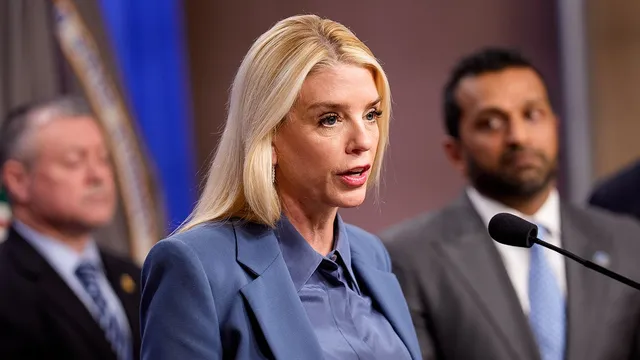
Two more arrested in Minnesota church protest
- Federal authorities have arrested two suspects related to the Minnesota church protest following a federal indictment.
- The disturbances at the church involved a groups of activists protesting against immigration enforcement.
- The arrests underscore an ongoing federal investigation into actions viewed as violations of worshippers' rights.
Story
In January 2023, a disruption occurred at Cities Church in St. Paul, Minnesota, when a group opposed to U.S. Immigration and Customs Enforcement interrupted a Sunday service. The protest targeted the church's pastor, who is affiliated with ICE, and was conducted by approximately 30 to 40 individuals shouting slogans such as 'Justice for Renee Good.' Following this incident, a federal investigation led to the indictment of nine individuals including journalists and local activists for conspiracy against the rights of religious freedom. On February 04, 2023, Attorney General Pam Bondi announced the arrests of Ian Davis Austin and Jerome Deangelo Richardson as part of the ongoing federal actions against protesters involved in the church disturbance. This indictment emphasizes that the U.S. Justice Department considers the actions of the protesters a violation of federal civil rights laws, specifically targeting those who disrupted church services, thereby infringing on the First Amendment rights of worshippers. The involvement of journalist Don Lemon, who was arrested during the protest, has raised concerns regarding press freedoms and the treatment of journalists in similar situations, as his actions were framed as part of his professional reporting duties. As the DOJ continues to investigate, additional arrests may follow, indicating that the repercussions of the protest at Cities Church have brought heightened scrutiny to civil rights enforcement in the context of immigration tensions in the region.
Context
The Ku Klux Klan Act, formally known as the Enforcement Act of 1871, was a significant piece of legislation passed in the United States aimed at curbing the rise of the Ku Klux Klan and other similar groups that sought to undermine the rights of African Americans during the Reconstruction Era. The Act arose following the violent actions of the Klan, which had emerged in the South after the Civil War with the intent to restore white supremacy through intimidation and violence against newly freed African Americans and their allies. In response to these escalating threats, Congress recognized the urgent need to protect civil rights and maintain order in a post-war America, leading to the passage of this law designed to combat these insurrections and uphold justice for all citizens. The Ku Klux Klan Act granted the federal government the power to intervene in states where individuals' civil rights were being violated, particularly through acts of violence associated with the Klan. It allowed federal authorities to prosecute individuals who conspired to deprive citizens of their rights, especially the right to vote and the right to equal protection under the law as guaranteed by the Fourteenth Amendment. The Act provided federal enforcement mechanisms, which included the deployment of federal troops to assist local authorities in maintaining peace and order and ensuring the protection of voters during elections. This federal involvement was seen as necessary due to the inability of many Southern state governments to control Klan activities or to provide adequate protection for African Americans. In addition to authorizing federal enforcement, the Ku Klux Klan Act was instrumental in addressing the broader climate of fear and lawlessness that characterized the South during this period. By criminalizing Klan activity and promoting federal accountability for civil rights violations, the Act symbolized a watershed moment in the federal government's engagement with civil rights issues. It established a precedent for future civil rights legislation by affirming the federal government's role in protecting the rights of individuals against private violence and intimidation. However, the enforcement of the Act met with varying degrees of success, as local resistance and the pervasive influence of white supremacy often hampered federal efforts. The legacy of the Ku Klux Klan Act remains significant in contemporary discussions about civil rights and federal intervention. While the law initially helped to suppress Klan violence in the short term, over the years, the Klan and similar groups have continued to evolve, leading to ongoing challenges in combating hate and ensuring justice for all citizens. The Act reflects the enduring struggle for civil rights in America and highlights the importance of vigilance in defending those rights against any form of oppression or violence. Moreover, it serves as a reminder of the federal government's responsibility to protect its citizens against organized hate and violence, shaping the discourse around civil liberties that persists in modern times.
