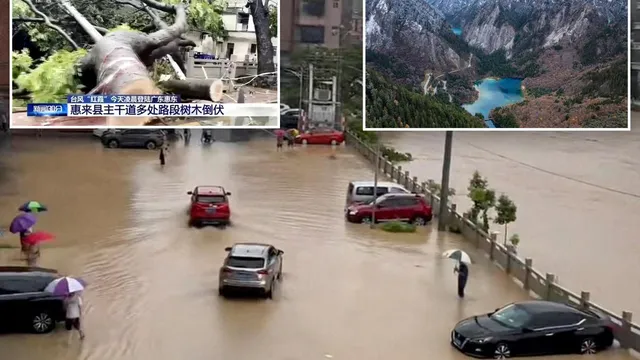
On July 27, 2026, China undertook the evacuation of tourists stranded at the UNESCO World Heritage site of Jiuzhaigou, located in the southwestern Sichuan province. This action was prompted by mudslides that occurred as a result of heavy rainfall, which was exacerbated by Typhoon Noul, the strongest typhoon to hit the country this year. The situation led to the issuance of the highest flash-flood alert across several provinces, indicating the severity of the weather conditions affecting the region.
Jiuzhaigou is renowned for its stunning landscapes, featuring vibrant pools, snow-capped mountains, and cascading waterfalls. However, the area faced significant challenges due to the extreme weather, which resulted in the closure of key tourist sites. Local authorities announced that areas above Arrow Bamboo Lake and the entire Zechawa Valley would be temporarily closed to ensure the safety of visitors. The evacuation efforts were reported by state broadcaster CCTV, highlighting the urgency of the situation as authorities worked to safely relocate those affected.
The heavy rains and subsequent mudslides are part of a broader pattern of severe weather impacting China, particularly during the peak summer rainy season. The Ministry of Water Resources and the China Meteorological Administration issued a red warning for flash floods, indicating high risks in multiple provinces, including Jiangxi, Hunan, Guangdong, Sichuan, Shaanxi, Gansu, and southeastern Xinjiang. This warning reflects the increasing frequency and intensity of extreme rainfall events, which weather experts predict will continue in the coming weeks.
The recent weather-related disasters have resulted in tragic consequences across the country. In Chongqing, a massive landslide claimed the lives of 11 individuals, with 50 others reported missing. Additionally, a landslide in Tanchang, Gansu province, resulted in 21 fatalities, while flash floods in Weiyuan county led to the deaths of 10 tourists and injuries to 23 others. These incidents underscore the dangers posed by mudslides and soil erosion, particularly in China's mountainous regions, where steep river valleys are prone to such disasters. As the country navigates through its peak flood control window, known as Qixia Bashang, the need for effective disaster management and preparedness becomes increasingly critical.