

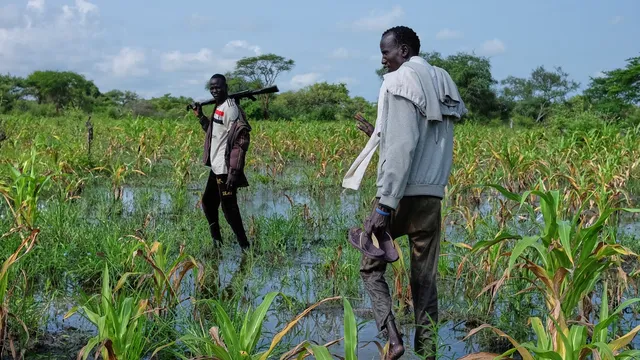
Government-aligned fighters kill civilians in South Sudan ambush
Government-aligned fighters kill civilians in South Sudan ambush
- The security situation in South Sudan has worsened since December 2025, leading to fears of a renewed civil war.
- Political tensions, particularly involving Riek Machar and government actions, have exacerbated ethnic violence in Jonglei State.
- Recent attacks on civilians demonstrate a pattern of atrocities, raising concerns over humanitarian crises and stability in the region.
Story
In South Sudan, the security landscape has dramatically deteriorated since the end of 2025, raising fears of a renewed civil war, particularly in conflict-affected Jonglei State. Intense clashes have erupted between the South Sudan People's Defense Forces and the opposition factions, leading to significant casualties and displacement. Between December 1, 2025, and January 23, 2026, approximately 200 people were killed due to ongoing hostilities. Reports from the United Nations indicate that around 280,000 individuals have been displaced in Jonglei State. The resurgence of violence has been attributed to a variety of political tensions and military actions, including the arrest and discontent of opposition leader Riek Machar, which has heightened conflicts and escalated ethnic tensions in the region. In January 2026, a disturbing incident occurred in the village of Pankor in Ayod County, where fighters used the false promise of food aid to lure villagers out of their homes. Survivors reported that these fighters, associated with the government and part of the Agwelek militia, killed at least 22 individuals, mainly women and children. Eyewitnesses described how the attackers bound the hands of several men and opened fire indiscriminately, resulting in mass casualties. This incident is part of a larger pattern of violence that has ensnared civilians since the war has intensified. Amidst ongoing clashes, the actions of the Agwelek militia commander, Lt. Gen. Johnson Olony, have raised alarm. Reports of his orders to kill civilians during military operations have led opposition officials to accuse the government of genocidal intentions against the Nuer people, exacerbating an already volatile situation. Additionally, the removal of Angelina Teny, the wife of Machar, from her government position further spurred unrest, as many view these political maneuvers as direct threats to the fragile peace established by the 2018 agreement. The civil strife has not only led to loss of life but has also decimated communities, with reports of widespread displacement and humanitarian crises unfolding. The nature of the conflict underscores a troubling trend in South Sudan, whereby political grievances often translate into ethnic violence. The government's actions, characterized by significant military operations and retaliatory measures, risk provoking broader conflict, risking further civilian casualties and long-term instability in the region. As hostilities continue to rise and power struggles affect governance dynamics, the international community remains concerned about humanitarian implications and regional security, as Uganda's support for the government complicates relations with opposition forces linked to Sudan. The evolving situation in South Sudan remains critical, with dire consequences for its people and the broader East African region in play.
Context
The impact of the 2018 peace agreement in South Sudan has been profound and multifaceted, reflecting both the aspirations of the South Sudanese people for long-lasting peace and the challenges that remain in achieving stability. Initiated to end years of civil conflict that erupted in 2013, the peace agreement aimed to unify rival factions, particularly the Sudan People’s Liberation Movement (SPLM) and its offshoots, in an effort to foster national reconciliation and rebuild the war-torn nation. The agreement was met with hope from the international community as a significant step towards restoring order and addressing the humanitarian crisis that had plagued South Sudan since the onset of violence. However, the implementation of the peace deal has faced several obstacles, including delays in forming a transitional government and ongoing intermittent violence among splinter groups, which often undermines the progress made by the accord. Despite these challenges, there are signs of positive impact from the peace agreement. The formal cessation of hostilities allowed for gradual returns of internally displaced persons to their home regions, facilitating critical development initiatives and supporting local economies. Additionally, there has been increased engagement from humanitarian organizations seeking to deliver aid, education, and health services, which had been severely disrupted during the conflict. The peace agreement also reignited discussions around governance and inclusivity, emphasizing the importance of engaging diverse ethnic communities in the peace process, thus creating opportunities for dialogue and personalized reconciliatory measures. Strengthening local governance structures represents a critical step towards addressing long-standing grievances and promoting social cohesion. Moreover, the role of regional and international stakeholders remains crucial in sustaining the momentum generated by the peace agreement. Neighboring countries and organizations, such as the Intergovernmental Authority on Development (IGAD) and the African Union, have played important roles in mediating conflict and providing support for peace initiatives. Their continued involvement will be essential to ensuring that the political will to maintain peace is upheld and that mechanisms for accountability are established to address human rights violations that occurred during the civil war. The international community's commitment to providing economic assistance and monitoring the peace process will also affect the long-term success of the agreement. In conclusion, while the 2018 peace agreement in South Sudan holds significant promise for fostering stability and rebuilding the nation, it is clear that the journey toward lasting peace is fraught with challenges. The ability of the signatories to implement the terms of the agreement, the role of the international community, and the support from local populations will ultimately determine the long-term impact of this peace initiative. It remains vital for all stakeholders involved to stay focused on the provisions of the agreement and to work collaboratively towards a peaceful and prosperous South Sudan, addressing both immediate needs and the root causes of the conflict.


