

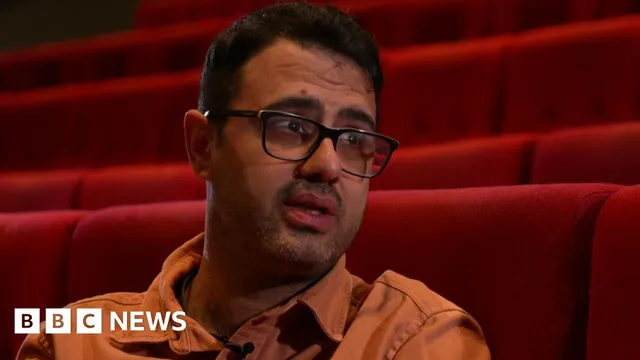
Arash Sedighi shares his refugee journey through film
Arash Sedighi shares his refugee journey through film
- Arash Sedighi, smuggled out of Iran in 1986 as a child, faced the challenges of adapting to a new life in Manchester.
- His experiences inspired the creation of his short film 'Holding on to Home,' which highlights the struggles of fitting in and belonging.
- The film gained recognition at film festivals and is an important reminder of the rising number of refugees due to ongoing conflicts.
Story
In 1986, Arash Sedighi, a child refugee from Iran, arrived in the UK with his pregnant mother and father to escape the Iran-Iraq war. The family was smuggled out with only two suitcases, marking the beginning of a challenging new life in Manchester. Sedighi's experiences of growing up in this new environment serve as the foundation for his short film, 'Holding on to Home.' This film has garnered positive feedback at various film festivals and is scheduled to be screened at the Manchester Film Festival. Sedighi reflects on the importance of sharing refugee stories, especially in light of ongoing conflicts in the Middle East, emphasizing that many more refugees will soon emerge due to the current situation in Iran. Selp-conscious struggles of identity and belonging are depicted through the character played by Sam Abbasi, who reflects Sedighi's own experiences as a child trying to fit in. The film also features a poignant symbol from Sedighi's childhood - a set of marbles that his father brought with him from Iran, representing his only possession from his early years. The film showcases the arduous transition faced by Sedighi's parents, who worked multiple jobs to provide a sense of belonging for their children in a foreign land.
Context
The Iran-Iraq War, which lasted from 1980 to 1988, was marked by territorial disputes, ideological differences, and regional power dynamics. Understanding the causes of refugeeism during this period requires an analysis of the complex interplay of political, social, and economic factors that influenced mass displacement. The conflict was initially rooted in disputes over the Shatt al-Arab waterway, a critical maritime border between the two nations. Additionally, the Islamic Revolution of 1979 in Iran heightened sectarian tensions and prompted Iraqi fears of a similar uprising, contributing to a preemptive desire to engage militarily. This war ultimately resulted in the widespread disruption of lives, leading to significant refugee flows from both countries, as civilians sought safety away from conflict zones. The war's violence and the militarization of communities laid the groundwork for extensive human rights violations, pushing thousands of civilians to flee their homes. The Iranian regime's targeted campaigns against ethnic minorities, particularly the Kurds, further exacerbated the refugee crisis, as many sought asylum in neighboring countries such as Turkey and Iraq. Similarly, the Iraqi government employed brutal tactics in response to suspected disloyalty among its Kurdish population, fostering an environment where fleeing was perceived as the only means of survival. The loss of housing, employment, and basic services created widespread economic instability, further incentivizing mass displacement. Another critical factor in the refugee crisis was the impact of international involvement in the war. Both Iran and Iraq received military and financial support from various countries, including the United States, the Soviet Union, and Gulf states, which prolonged the conflict and fortified the resolve of each side to continue fighting. This external involvement escalated hostilities and intensified the challenges faced by civilians, who often found themselves caught in the crossfire. Additionally, refugees encountered obstacles in their journey, such as closed borders and hostile local populations, which complicated their attempts to escape. The humanitarian response was inadequate to meet the needs of the displaced, leaving many in precarious conditions in refugee camps. In summary, the causes of refugeeism during the Iran-Iraq War stemmed from a combination of violent, oppressive state actions, economic strife, and external political factors. The legacy of this conflict resulted in millions of refugees, many of whom struggled with the scars of war long after the fighting ceased. Understanding these dynamics is crucial for comprehending not only the immediate humanitarian crises that emerged during the war but also the long-term implications for regional stability and the ongoing challenges of displacement in the Middle East.


