

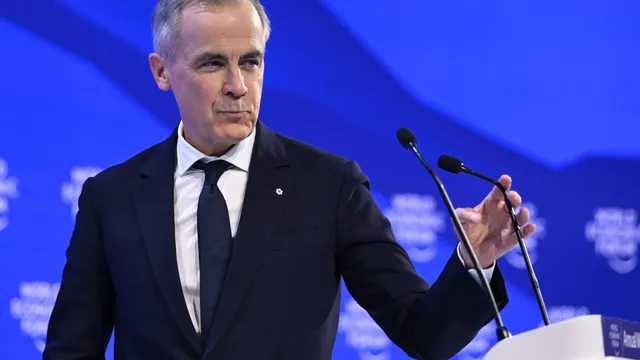
Mark Carney insists US must respect Canadian sovereignty amid Alberta separatism discussions
Mark Carney insists US must respect Canadian sovereignty amid Alberta separatism discussions
- On January 29, 2026, Mark Carney addressed concerns about US officials meeting with Alberta separatists.
- He affirmed expectations for the US to respect Canadian sovereignty during his press conference in Ottawa.
- The emerging separatist sentiments in Alberta highlight the strain on federal policies affecting provincial autonomy.
Story
On January 29, 2026, in Canada, Prime Minister Mark Carney addressed concerns regarding US officials allegedly meeting with Alberta separatists seeking independence. During a press conference held in Ottawa, Carney emphasized that he anticipated the US administration would respect Canada's sovereignty in light of these reports. He stated that President Trump had never brought up the topic of Alberta's potential separation during their discussions. The Alberta Prosperity Project, a group advocating for a referendum on independence, was noted as pursuing engagements with US Treasury and State Department officials. This initiative comes as provincial tensions rise due to perceived federal overreach in Alberta's affairs. US Treasury Secretary Scott Bessent's comments about allowing Alberta's independence reflected a growing unrest within the province regarding how federal policies have impacted its economy, particularly in energy production. With a significant portion of Alberta's population feeling neglected by Ottawa, the Alberta Premier, Danielle Smith, maintained that she preferred to remain part of Canada, despite 30% of residents expressing support for more autonomy from federal governance. Additionally, Premier Smith's push for new pipeline projects to facilitate oil exportation has highlighted the ongoing conflicts between provincial and federal authorities. Carney's dialogue with Trump, which encompasses not only economic issues but also broader global challenges like security matters pertaining to Ukraine and Venezuela, seeks to position Canada as a proactive player amidst a changing geopolitical landscape. The need for middle powers to unite was a point Carney argued strongly during his address at the World Economic Forum, where he contended that nations not engaged in trade discussions could find themselves at a disadvantage. The future of Canadian-U.S. relations and agreements, particularly the looming renegotiation of the United States-Mexico-Canada Agreement, underscores the urgency to manage these tensions effectively. These discussions come at a sensitive time for Canada, which is actively seeking to diversify its trade relationships away from overwhelming dependency on the U.S. market. The prime minister intends to forge nine new trade agreements within the next decade to strengthen Canada's economic autonomy. Carney's assertive stance towards the White House could shape a pivotal era in Canada-U.S. relations as both countries grapple with internal pressures and external expectations regarding their economic and political alignment.


