

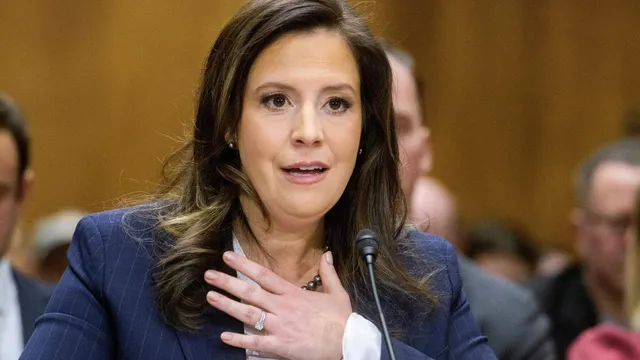
Elise Stefanik labels New York City mayor-elect as jihadist
Elise Stefanik labels New York City mayor-elect as jihadist
- Elise Stefanik, a Republican from New York, criticized Mayor-elect Zohran Mamdani, calling him a jihadist.
- Donald Trump met with Mamdani at the White House before his administration takes office in January.
- Stefanik's rhetoric suggests internal conflicts within the Republican Party regarding urban and progressive leadership.
Story
In a recent political exchange, Elise Stefanik, a Republican Representative from New York, voiced her strong disagreement with the characterization of New York City Mayor-elect Zohran Mamdani, labeling him a "jihadist." This claim arose amidst rising tensions following Trump's support for Mamdani, during a meeting at the White House where the former President expressed confidence in Mamdani's upcoming administration. Mamdani, a self-identified democratic socialist who opposes certain Israeli policies, is set to assume office on January 1, marking a significant change in the city's leadership. The sharp contrast between Stefanik's comments and Trump’s supportive remarks suggests a growing divide within Republican ranks regarding how to approach urban leaders who have progressive agendas and ties to minority communities. Stefanik's declaration comes as she embarks on a campaign to become the governor of New York in the upcoming 2026 election. Drawing media attention, she has reinforced her position against Mamdani, using inflammatory rhetoric to galvanize her base. In a social media post, she reiterated her stance, asserting that if someone "walks like a jihadist, talks like a jihadist," they should be treated as such. This has drawn criticism from some quarters who feel her words are damaging and unsubstantiated. On the other hand, Trump's comments during their meeting aimed to establish a cooperative tone, emphasizing the importance of making New York City a better place. Mamdani described their interaction as productive, focusing on finding common ground despite the tensions surrounding his election campaign. The meeting brought about discussions concerning affordability for New Yorkers, an issue on which both leaders seem to find mutual concern. As the political landscape in New York shifts with Mamdani's election, the polarization illustrated by Stefanik’s comments raises questions about the future dynamics within the GOP—particularly regarding how to engage with elected officials who prioritize social justice and progressive policy agendas. The contrasting messages from Stefanik and Trump reflect broader rifts within the party, hinting at possible struggles as they prepare for upcoming elections and public debates over leadership and policy direction.


