

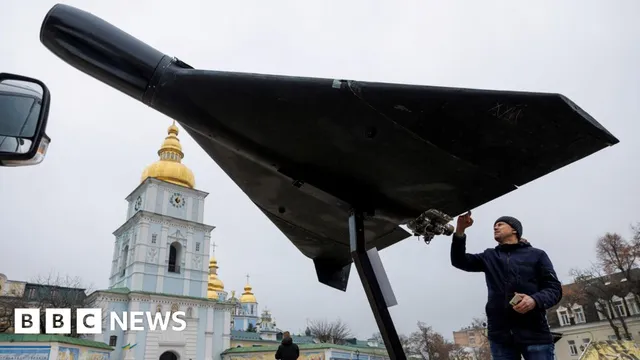
Ukraine fears air defense shortages due to Iran conflict
Ukraine fears air defense shortages due to Iran conflict
- Ukrainian President Volodymyr Zelensky has expressed concerns about potential shortages of air defense missiles due to the conflict in the Middle East.
- The focus on Iran by the U.S. and allies may lead to a diversion of military resources that could otherwise support Ukraine.
- Zelensky emphasizes the need for timely support to maintain Ukraine's security amidst growing geopolitical tensions.
Story
Ukraine has expressed deep concerns over the implications of the ongoing military conflict in the Middle East on its own defense capabilities against Russian aggression. President Volodymyr Zelensky has indicated that the current focus of U.S. and allied military resources on Iran may lead to a shortfall in air defense systems essential for Ukraine’s protection. As the U.S. engages in intensive military support to counter Iran, Zelensky fears that the attention and resources that could have been allocated to Ukraine may be diverted, leaving his country more vulnerable to attacks from Russia. This shift in focus raises critical concerns, particularly about Ukraine's ability to defend its cities amid ongoing drone and missile assaults from Russian forces, which could be exacerbated by a potential lack of defensive munitions. The president also noted that his country could be affected by rising oil prices due to this ongoing conflict, which may impact Ukraine's military financing and logistical support. The need for increased cooperation with allies to secure weapon supplies remains pivotal, especially at a time when Russian forces are actively pursuing territorial gains in Eastern Ukraine. The war fatigue among the international community regarding Ukraine, in the face of heightened conflicts elsewhere, could jeopardize the support Kyiv has depended on. Overall, the entangled geopolitical challenges pose significant risks for Ukraine, where any reduction in military support could reverse recent territorial gains made by its forces. Zelensky's call for timely support on defense systems emphasizes the urgent need to ensure Ukraine’s security interests are prioritized amid shifting global military focuses.
Context
The Gulf conflicts, particularly those involving Iraq and Iran, have profoundly influenced international diplomacy since the late 20th century. The first Gulf War in 1990-1991, triggered by Iraq's invasion of Kuwait, led to unprecedented global diplomatic engagements. Nations worldwide rallied against the aggressor, showcasing a rare moment of unity under the United Nations auspices. This military intervention reshaped security alliances and established the United States as the predominant military power in the region, which subsequently influenced its diplomatic relations with Middle Eastern countries. The war also elevated the role of regional powers, emphasizing the importance of oil supply stability in international relations, and fundamentally altered perceptions of sovereignty and interventionism in global diplomacy. The aftermath of the Gulf War and the subsequent Iraq War in 2003 marked a turning point in international diplomacy. The U.S.-led invasion, justified by the belief that Iraq harbored weapons of mass destruction, raised serious concerns about unilateral military actions without broad international support. The conflicts brought to the forefront issues such as the legitimacy of intervention, the sovereignty of nations, and the responsibility to protect. Furthermore, the instability created in Iraq had ripple effects across the Middle East, leading to a series of conflicts and humanitarian crises that reshaped diplomatic relations between Western nations and the Arab world. Today, the impact of the Gulf conflicts is evident in the intricate web of alliances and hostilities that define current international diplomacy. Countries such as Iran have become pivotal players in regional dynamics, often clashing with U.S. interests and its allies, particularly Saudi Arabia and Israel. The ongoing tensions highlight the challenges faced by international diplomatic efforts to stabilize the region. The conflicts have also sparked debates on the efficacy of sanctions and diplomatic pressure as tools for fostering peace and democracy in the Middle East, leading to a reevaluation of Western foreign policy approaches. Moreover, the influence of Gulf conflicts on international diplomacy extends beyond direct military engagement to include economic considerations, notably energy security and natural resource management. The interdependence of global powers on Middle Eastern oil resources creates a complex diplomatic framework where energy policies are deeply entwined with international relations. As global energy dynamics evolve with the rise of renewable resources, the legacy of Gulf conflicts continues to shape discussions on energy dependence and strategic partnerships, pushing countries to reassess their diplomatic engagements in the region. Thus, the Gulf conflicts have not only reshaped the balance of power in the Middle East but have also left an indelible mark on global diplomatic practices.


