

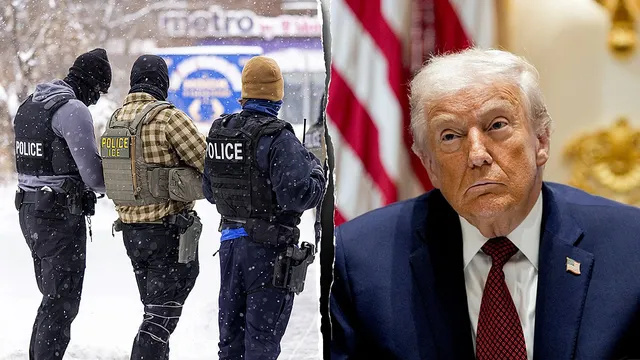
Trump agrees to reduce federal immigration enforcement in Minnesota
Trump agrees to reduce federal immigration enforcement in Minnesota
- Governor Tim Walz and Mayor Jacob Frey discussed the growing tension surrounding federal immigration enforcement with President Trump, leading to a commitment to withdraw some federal agents.
- The decision comes in the context of public outcry following fatal shootings involving federal agents, raising concerns about oversight and accountability.
- This agreement signals a potential shift towards reduced federal presence while encouraging cooperation with local authorities in immigration matters.
Story
In Minnesota, tensions have escalated regarding federal immigration enforcement following controversial incidents involving federal agents. Governor Tim Walz and Minneapolis Mayor Jacob Frey held discussions with President Donald Trump, resulting in an agreement that some federal immigration officers would begin withdrawing from the state. This decision emerged after sharp criticism of the federal enforcement operations, especially following the fatal shooting of demonstrator Alex Pretti by federal officers, which raised public outcry and demands for accountability. During their conversations, Walz emphasized the need for more cooperative immigration enforcement that prioritizes violent criminals, which Trump appreciated, indicating a potential shift in federal policy toward local input and coordination. The surge of federal agents in Minnesota, reportedly over 2,000, was part of Trump’s aggressive enforcement strategy, which sought to intensify operations across the state amidst rising racial tensions and public dissent. This surge has been particularly scrutinized after two fatal shootings connected to the agents. Trump acknowledged during an interview that, while he found the work of federal agents to be commendable, it might be time to re-evaluate their presence in Minnesota due to mounting public pressure. This response illustrates the balancing act faced by federal officials amidst growing calls from both local authorities and lawmakers to address immigration enforcement. Moreover, the discussions between state and federal leaders also addressed the desire for calm in the state, as recent events reflected a significant backlash against aggressive enforcement practices. Critics, including Democratic lawmakers and some Republicans, have called for inquiries into the actions of federal agents, emphasizing the need for accountability and clearer guidelines for immigration enforcement. Trump’s agreement to consider reducing the federal presence highlights an attempt to reduce tensions while still maintaining a firm stance on immigration enforcement. Moving forward, the involvement of local authorities in discussions about law enforcement operations may signal a shift towards a more collaborative approach in areas of immigration policy. Ultimately, the agreement reached between Trump, Walz, and Frey may indicate a pivotal change in federal-local relationships regarding immigration enforcement, signaling a potential transition towards increased dialogue and reduced tensions in the handling of immigration issues in Minnesota. As the situation evolves, both local and federal officials aim to restore community trust and ensure a safer environment for residents, all while navigating the complexities of federal immigration policies that have drawn significant criticism nationally.


