

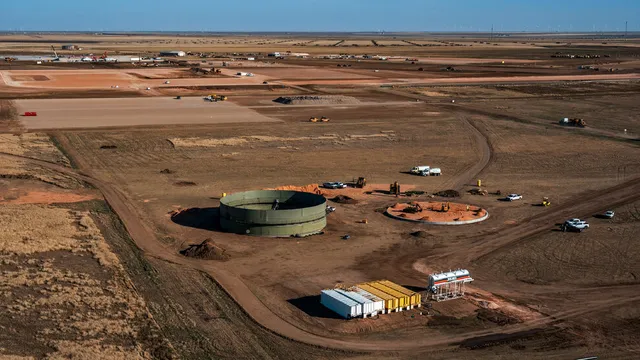
Elon Musk launches massive AI data center project in Saudi Arabia
Elon Musk launches massive AI data center project in Saudi Arabia
- Elon Musk's xAI will collaborate with Saudi firm Humain on a data center project.
- The data center is expected to operate with 500 megawatts of power, surpassing other xAI facilities.
- This initiative highlights Saudi Arabia's strategy to become a central hub for technology and artificial intelligence.
Story
Saudi Arabia has been actively pursuing diversification of its economy, particularly in the technology and artificial intelligence sectors. Recently, during Crown Prince Mohammed bin Salman's visit to the United States, Elon Musk revealed plans for a substantial data center to be developed in partnership with the Saudi company Humain. This initiative illustrates the Kingdom's commitment to transform from an oil-dependent economy into a global AI and tech hub. The data center is expected to consume an impressive 500 megawatts of electricity, making it the largest for Musk's xAI outside the United States. The collaboration with Humain, a company backed by the Saudi sovereign wealth fund, marks a significant business tie between Musk and Saudi Arabia while also showing the Kingdom's ambitions of fostering local capabilities in artificial intelligence. The center will utilize Nvidia’s advanced computing chips, which are crucial for AI operations, thereby enabling Saudi Arabia to stay competitive in the rapidly advancing tech landscape. This project aligns with the recent agreement that allows Saudi Arabia to purchase U.S. semiconductors for AI development. In a broader context, this move comes at a time when major American tech companies, including Amazon and Microsoft, have been expanding their presence in Saudi Arabia. The announcement coincided with discussions regarding various tech and military deals between the two nations, emphasizing the strategic importance of technological progress in their bilateral relations. Musk's vision for the future includes using solar-powered AI satellites, showcasing the potential direction of AI computing and its integration into everyday life. The significant investment in this data center and the focus on AI technology represent the Kingdom's long-term strategy to diversify its energy-driven economy and emerge as a leader in tech innovation on the global stage. The data center project not only promises to create numerous job opportunities in the region but also reinforces the partnership between Mohammed bin Salman and industry leaders like Musk, signaling a new era of collaboration in AI and related technologies.
Context
Saudi Arabia has embarked on an ambitious journey to diversify its economy, primarily driven by the need to reduce its reliance on oil revenues. This effort is central to the Kingdom's Vision 2030 plan, which aims to transform various sectors, including tourism, entertainment, and technology. The diversification strategies not only aim to boost economic stability but also to create jobs for a young and growing population, thus addressing domestic challenges such as unemployment and over-dependence on the public sector. Key programs such as the Public Investment Fund (PIF) have been established to support investments in non-oil sectors, fostering innovation and entrepreneurship across the country. The tourism sector has been a significant focus of Saudi Arabia's diversification efforts, with initiatives to open up the Kingdom to international visitors and promote cultural heritage. Major projects, such as NEOM and the Red Sea Project, are being developed to position Saudi Arabia as a global hub for sustainability and tourism. These projects not only aim to attract foreign tourists but also encourage local investment in leisure and hospitality, thus contributing to GDP growth and job creation. By fostering a more welcoming environment, the Kingdom is also changing its global image and enriching its cultural landscape, positioning itself as a desirable destination for travelers. Furthermore, the entertainment sector has seen a rapid expansion as part of the government's commitment to provide more leisure activities for its citizens. The establishment of the General Commission for Audiovisual Media and the hosting of high-profile events, such as concerts and sporting competitions, reflect the Kingdom's desire to enhance social life and create a vibrant community. This sector's growth has implications for job creation, local business development, and increased consumer spending, ultimately driving economic diversification. In conclusion, Saudi Arabia's economic diversification efforts have the potential to reshape its economy significantly. By investing in a wide range of sectors and embracing innovation, the Kingdom is poised to create a more sustainable and resilient economy that stands the test of global market fluctuations. Though challenges remain in execution and societal adjustments, the commitment to diversification signifies a proactive approach toward securing a future economic landscape that relies less on traditional oil revenues. The ongoing progress in tourism, entertainment, and other sectors highlights the potential of the Kingdom to evolve into a diversified economy responsive to both domestic needs and global opportunities.


