

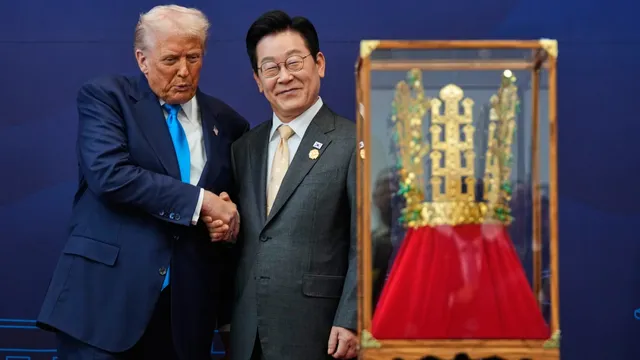
Trump hikes tariffs on South Korean imports to 25%
Trump hikes tariffs on South Korean imports to 25%
- In January 2026, Trump announced an increase in tariffs on South Korean imports.
- The tariff increase is a reaction to South Korea's failure to approve a trade framework.
- This move may complicate U.S.-South Korea relations and impact global markets.
Story
In January 2026, President Donald Trump announced a significant increase in tariffs on imports from South Korea. This decision was prompted by the South Korean National Assembly's failure to approve a previously agreed trade framework. Trump stated that the tariffs would rise from 15% to 25%, with a specific focus on automotive, lumber, and pharmaceutical products. The increase reflects ongoing frustrations regarding South Korea's commitments for substantial investments into the U.S. economy, amounting to $350 billion over several years. Concerns surrounding South Korea's legislative action have led to a tense atmosphere between both nations, which are crucial trading partners. Historically, relations between the U.S. and South Korea have experienced ups and downs, particularly concerning trade agreements and investment pledges. Trump initially celebrated a trade deal with South Korea’s president in July 2025 and reaffirmed commitments during his visit in October. Despite these efforts, legislative delays have hindered the deal's implementation. Economists have voiced their concerns on the repercussions of such tariff threats, which could exacerbate uncertainty in global markets, and hinder long-term investment strategies for both countries. The hikes come during a critical period as negotiations with various nations remain ongoing. Trump has resorted to tariffs broadly in his administration, using them as a tool to facilitate better trade terms and to pressure countries into compliance. The announcement has sent shockwaves through South Korean markets, particularly affecting the automotive sector, which is a key area of trade. Stock prices for companies such as Hyundai and Kia experienced notable declines following the tariff announcement, indicating a direct response to higher perceived costs associated with exports to the U.S. In response to the tariff increase, South Korean leaders have expressed concerns over the implications for their economy and have sought dialogue with U.S. officials to resolve the situation amicably. South Korea remains one of the top trading partners for the United States, with imports worth nearly $150 billion annually. As negotiations continue, both nations will need to address the trade imbalances that have fueled tensions and find common ground to maintain their longstanding partnership.
Context
The history of US-South Korea trade relations has been characterized by a progressive evolution of economic ties that have significantly shaped both countries' economies and diplomatic standings. When South Korea emerged from the devastation of the Korean War in the early 1950s, the United States played a pivotal role in its reconstruction, fostering a relationship underpinned by economic assistance and military support. This early partnership laid the groundwork for future trade as South Korea transitioned from an agrarian economy to an industrial powerhouse during the 1960s and 1970s. Bilateral trade began to increase, with the US becoming a vital market for South Korean products, such as textiles and electronics, which set the stage for a growing economic interdependence between the two nations. The trade relations saw a significant turning point with the signing of the Korea-U.S. Free Trade Agreement (KORUS FTA) in 2012, which was designed to reduce tariffs and other trade barriers. This landmark agreement symbolized a deepening of economic ties and aimed to enhance the alignment of regulatory standards in various sectors, including automobiles and agricultural products. The KORUS FTA was a response to the evolving global trade environment and reflected mutual interests in boosting economic growth, fostering innovation, and increasing competitiveness. Following its implementation, both the US and South Korea experienced notable increases in bilateral trade and investment flows, marking an important chapter in their economic relationship. Over the years, several challenges have emerged, including trade imbalances and disputes over specific industries such as steel and agriculture. The trade deficit, which the US faced with South Korea, became a focal point for discussions about the fairness and effectiveness of the KORUS FTA. Adjustments and negotiations have been ongoing, with both countries striving to address concerns that may impact the trade dynamics. The US has sought greater access to South Korean markets for its agricultural products, while South Korea has pushed for the protection of its automotive industry. These discussions are essential for mitigating tensions and ensuring mutual benefits in the trading relationship. As of 2026, the US-South Korea trade relationship continues to adapt to global economic changes, including shifting trade patterns influenced by emerging markets and the increasing importance of technology-driven industries. Both nations prioritize collaboration in areas such as digital trade, green energy, and innovation, addressing contemporary challenges, including supply chain vulnerabilities revealed during the COVID-19 pandemic. The history of trade relations between the US and South Korea reflects a complex interplay of partnership, challenge, and adaptation that has evolved over decades, ultimately fostering stronger economic ties that benefit both countries.


