

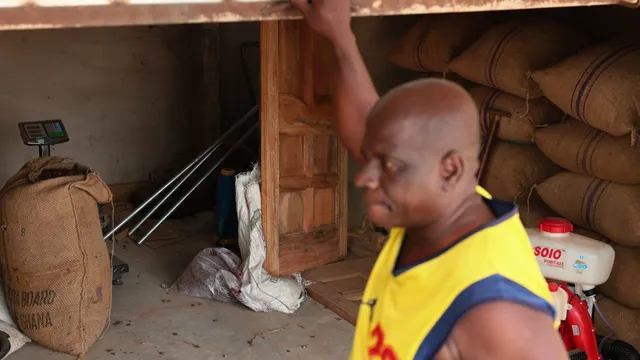
Cocoa farmers abandon crops for more profitable gold mining amid price crash
Cocoa farmers abandon crops for more profitable gold mining amid price crash
- Farmers in Ghana and Ivory Coast are seeing dramatic declines in cocoa bean yields and prices, leading many to abandon cocoa farming.
- Government price cuts have forced farmers to consider alternative livelihoods, including illegal gold mining.
- Without intervention, the cocoa industry in West Africa may face a bleak future, jeopardizing the farmers' financial security and agricultural sustainability.
Story
In recent years, cocoa farmers in Ghana and Ivory Coast have faced severe hardships due to a drastic decline in cocoa bean yields and prices. Farmers like Fofie report their annual yields plummeting from 300 bags to just 50 bags, driven by factors including climate change, which has made traditional cocoa farming increasingly unsustainable. Both Ghana and Ivory Coast, responsible for nearly 70% of the world's cocoa supply, have seen prices crash so significantly that many farmers are struggling to make a living. As a result, some have begun to abandon their land for other purposes, such as illegal gold mining, which has become more lucrative than cocoa production. Fofie, for example, has opted to sell parts of his land to gold miners, driven by fears of falling into debt and a desire to ensure financial survival. Governments in these countries are racing to find solutions to the crisis. In January, Ghana reduced its fixed price for cocoa beans by 28%, hoping to attract buyers amidst the price slump. Ivory Coast also significantly lowered its payments to farmers, cutting the price of cocoa beans by more than half for the 2026 harvest. These drastic measures have not alleviated the farmers' concerns, as they now face a slim profit margin, barely covering production costs. Farmers express that if they accept the current prices, it could lead to dire consequences, including the inability to finance their children's education. In January, some farmers even protested in the capital, Accra, against the price cuts that threaten their livelihoods. Additionally, the international market for cocoa has been destabilized, as global traders are unwilling to purchase from Ghana and Ivory Coast without incurring losses due to the imbalanced pricing structure. While cocoa producers in South America and Asia have managed to improve their supply and competitiveness, West African farmers, reliant on a fixed price mechanism that supposedly protects them, find themselves on the losing end. As prices fluctuate sharply, many are pushed toward other endeavors, such as mining, that offer better financial returns. The structural issues and recent price cuts may lead to further agricultural abandonment in favor of unsustainable practices, exacerbating the ongoing crisis in cocoa farming. The decline in cocoa farming not only threatens the livelihoods of hundreds of thousands of farmers but may also have broader implications for global cocoa supply chains, affecting consumers and industry stakeholders worldwide. Farmers feel increasingly abandoned by the market system that was meant to safeguard their interests. Without meaningful intervention and support to stabilize prices and improve climate resilience, West African cocoa farming may face an uncertain future, burdened by the increasingly alluring prospect of more immediate profits from alternatives like gold mining.


