

Venezuela's oil sector opens to privatization amid geopolitical shifts
Venezuela's oil sector opens to privatization amid geopolitical shifts
- Venezuela's National Assembly passed a reform allowing private companies more control in the oil industry.
- The reform aims to attract foreign investment and revive the economy amid past mismanagement.
- This marks a significant shift away from socialist policies that dominated the oil sector for over two decades.
Story
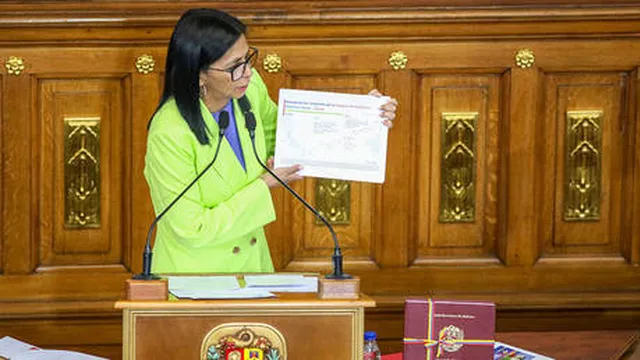
Venezuela has undergone a significant change in its oil policy as the National Assembly approved a sweeping reform allowing increased private and foreign investment in the oil sector. This decision was made less than a month after a U.S. military operation resulted in the capture of then-President Nicolás Maduro in Caracas. With the acting President Delcy Rodríguez backing this move, the reform signifies a drastic departure from the socialist policies established under the late President Hugo Chávez that consolidated state control over the oil industry. The new law permits private companies to have more autonomy, manage production, and handle oil sales independently of government oversight. This legislative change aims to attract foreign investment, especially from U.S. oil companies, after decades of mismanagement and under-investment had eroded Venezuela's once-thriving oil sector. The revisions include ensuring that private companies can settle disputes through independent arbitration rather than Venezuelan courts, perceived as politicized. The approval of the reform, alongside recent easing of U.S. sanctions on Venezuelan oil, represents a coordinated effort by both governments to realign the country's oil policies with international market demands and reinvigorate its economy. U.S. sanctions had previously deterred investment, leaving Venezuela's oil production, which once stood at around 3.2 million barrels per day, significantly diminished. The legislation is expected to reassure hesitant foreign investors wary of past expropriations. Despite the optimism surrounding the reforms, many opposition lawmakers voiced concerns that simply privatizing the oil sector will not address systemic corruption. They called for transparency measures to ensure that the changes lead to real improvements in governance and economic recovery. The reforms symbolize a critical juncture for Venezuela as it strives to recover from a long-standing economic crisis, coupled with dwindling oil revenues due to mismanagement and sanctions. The National Assembly's decision has energized hopes among oil workers and industry advocates, who believe that revitalized investment could restore Venezuela's position in the global oil market, though skepticism remains regarding whether these changes will truly deliver the needed revival. As the country looks towards its future, with the largest proven oil reserves globally, the collaboration between the Venezuelan government and U.S. interests may reshape the nation's energy landscape, signaling an end to over two decades of strict state control over oil resources. Whether these reforms translate into substantial economic benefits or are simply a superficial shift in policy remains to be seen, but the implications for Venezuela's energy sector and its citizens are profound and potentially transformative.
Context
Venezuela's oil nationalization has been a pivotal moment in the country's economic history, shaping its trajectory of development and governance. The roots of nationalization in Venezuela can be traced back to the early 20th century when oil was discovered in the country, leading to an influx of foreign investment and the emergence of multinational oil companies. Initially, the Venezuelan government welcomed this investment due to the economic growth and job creation it stimulated. However, as the global demand for oil surged in the post-WWII era, the Venezuelan state began to view its vast oil resources as a key national asset that should be controlled domestically rather than by foreign entities. This sentiment intensified with rising nationalism and debates over the equitable distribution of oil wealth among Venezuelans. The turning point came in the late 1950s when the administration of President Rómulo Betancourt initiated the process of nationalization. Betancourt's government aimed to increase state control over the oil industry and ensure that the benefits from oil extraction were preserved for the Venezuelan populace. In 1975, under President Carlos Andrés Pérez, the official decree for nationalization was implemented, leading to the creation of Petróleos de Venezuela, S.A. (PDVSA), a state-owned oil company that assumed control over all oil operations previously handled by foreign companies. This move was largely celebrated by the public as a victory for national sovereignty, with the anticipation that nationalization would result in more substantial income for the government and public services. However, the outcomes of nationalization were mixed. Initially, the government benefited from increased revenues as global oil prices surged during the late 1970s and early 1980s. This boom era allowed for significant investments in social programs and infrastructure; however, the oil industry became increasingly politicized, leading to inefficiencies and corruption. The decline in oil prices in the 1980s severely impacted the Venezuelan economy, resulting in a fiscal crisis. The over-reliance on oil revenues, combined with mismanagement in PDVSA, created vulnerabilities that would affect the economy for decades to come. Foreign investors began to withdraw, and the economy struggled to diversify, leading to long-term repercussions for economic stability. In the 1990s and early 2000s, a series of political shifts, including the rise of Hugo Chávez, brought further changes to the oil industry. Chávez reinstated and accelerated the nationalization process, portraying it as a means to reclaim Venezuela's wealth from imperialism, but critics argue that it led to decreased production levels and increased poverty. The effects of this nationalization policy are still felt today, as Venezuela continues to grapple with the impacts of its oil-centric economy. The ongoing challenges include political instability, economic downturn, and the dire humanitarian crisis engulfing the country. Oil nationalization in Venezuela remains a complex and contentious issue, reflecting the broader struggles over resource control, governance, and economic justice.


