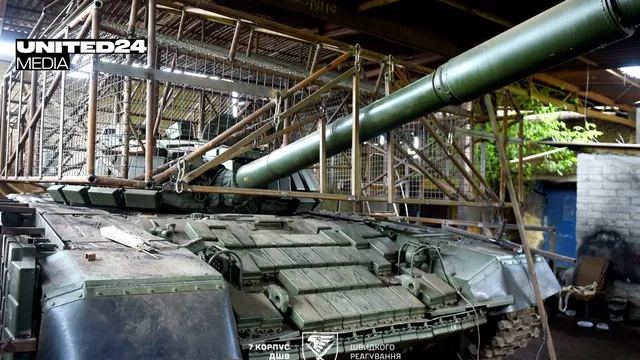
The T-72 tank has played a significant role in the ongoing conflict in Ukraine, particularly since the escalation of hostilities in 2014. Originally developed in the Soviet Union in the early 1960s, the T-72 is known for its robust design, relatively low production costs, and effective firepower. Its deployment in Ukraine has been marked by both its use by Ukrainian forces and the separatist groups, as well as the Russian military. The tank's adaptability and the various upgrades it has undergone over the years have allowed it to remain relevant on the battlefield, despite the introduction of more modern armored vehicles by NATO and other countries. The T-72's presence in Ukraine has highlighted the complexities of modern warfare, where older platforms can still pose significant threats when used effectively in conjunction with contemporary tactics and technology.
Throughout the conflict, the T-72 has been involved in numerous engagements, showcasing its strengths and weaknesses. Ukrainian forces have utilized captured T-72s, as well as their own variants, to counter the armored threats posed by separatist forces. The tank's 125mm smoothbore gun and composite armor provide a formidable combination, allowing it to engage enemy armor and fortifications effectively. However, the T-72 has also faced challenges, particularly from anti-tank guided missiles (ATGMs) and modern artillery systems that have been employed by both sides. The introduction of drone warfare has further complicated the battlefield dynamics, as UAVs can identify and target T-72s with precision, leading to significant losses.
The international response to the use of T-72 tanks in the conflict has been varied. Western nations have provided Ukraine with advanced anti-tank systems, such as the Javelin missile, to counter the T-72 threat. Additionally, there have been efforts to modernize the Ukrainian T-72 fleet, incorporating new technologies and upgrades to enhance their combat effectiveness. This modernization process has included improvements in fire control systems, armor protection, and mobility, allowing Ukrainian forces to better compete against the more advanced Russian armored units. The ongoing conflict has thus become a testing ground for various tank models and anti-tank strategies, with the T-72 serving as a central figure in this evolving landscape.
As of 2026, the T-72 remains a symbol of the enduring legacy of Soviet-era military technology in contemporary conflicts. Its continued use in Ukraine underscores the importance of adaptability in warfare, where older systems can still be effective when integrated with modern tactics and support systems. The lessons learned from the T-72's performance in Ukraine will likely influence future military strategies and the development of armored vehicles worldwide. The conflict has not only highlighted the resilience of the T-72 but also the necessity for continuous innovation in both offensive and defensive capabilities in the face of evolving threats.