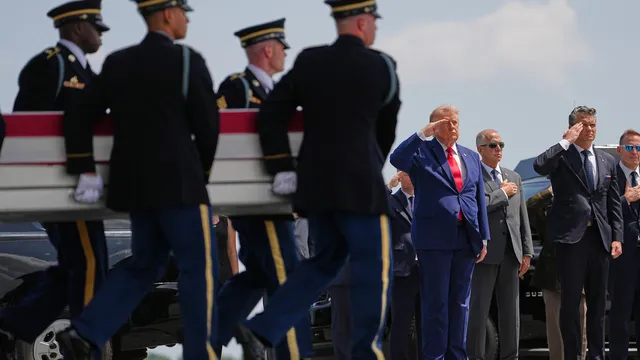
In the ongoing conflict with Iran, the Pentagon has revised its casualty reporting system, which now categorizes U.S. military casualties into two distinct periods. The first period covers the months of fighting from February to June, while the second period begins after July 7, coinciding with the collapse of a ceasefire. This change has raised concerns about the transparency of casualty reporting, as the Pentagon has stated that the official death toll since February stands at 18, with 624 injuries reported. However, the recent casualties, including four service members killed since July 7, are now classified under a new category labeled 'Overseas Operations.' The fatalities include 1st Lieutenant Tyler James Feehan, Private Isabella Gonzales, Sergeant Angel Rampersad, and Sergeant Michael Emmanuel Swinton, who were killed during Iranian attacks on U.S. military bases in the region. The Pentagon has attributed discrepancies in casualty numbers to 'temporary data disruption,' but critics argue that this division of casualty counts is a tactic to obscure the ongoing nature of the conflict. Representative Thomas Massie has condemned this approach as an 'absurd ruse,' highlighting the growing political pressure against the war, even among Republican supporters. The situation has intensified scrutiny over the Department of Defense's communication regarding military operations and casualties, especially as the U.S. continues to engage in airstrikes following Iranian provocations. The legal implications of the War Powers Act, which requires the president to seek congressional approval for military operations beyond 60 days, remain a contentious issue as the conflict evolves.