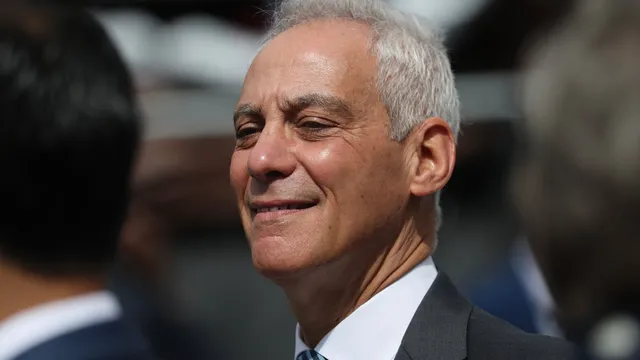
Rahm Emanuel criticizes U.S. support for Israel in Tel Aviv speech
politics
controversial
impactful

Rahm Emanuel criticizes U.S. support for Israel in Tel Aviv speech

20
(Update: )
country in Western Asia
Prime Minister of Israel (1996–1999, 2009–2021, 2022–present)
city in Israel
politician, investment banker, White House Chief of Staff
  • Rahm Emanuel is set to deliver a speech in Tel Aviv criticizing the U.S.-Israel relationship.
  • He proposes significant changes to U.S. policy, including sanctions against Israel for attacks on Palestinians.
  • Emanuel's remarks reflect a growing shift among Democrats regarding support for Israel.
Share opinion
2

Story

In a significant speech delivered at Tel Aviv University, Rahm Emanuel, a prominent Democrat and potential presidential candidate, criticized the longstanding U.S. policy of unconditional support for Israel. He argued that the U.S.-Israel relationship is at a critical juncture and cannot continue as it has been. Emanuel's remarks come amid a growing shift among Democrats regarding Israel, particularly following the October 7, 2023, Hamas-led attacks and the ongoing conflict in Gaza. A recent poll indicated that a majority of Democrats now believe the U.S. is too supportive of Israel, reflecting a notable change in public sentiment. Emanuel's speech is particularly striking given his history with Israel and his previous role as a staunch defender of the country. He plans to propose sanctions against Israelis who attack Palestinian civilians and to end U.S. subsidies for Israel's defense budget, suggesting that Israel should purchase American weapons under the same terms as other allies. Emanuel directly blames Israeli Prime Minister Benjamin Netanyahu for leading the country into a dead end and criticizes successive U.S. administrations for their unconditional backing of Israel. The speech is part of a broader strategy for Emanuel as he raises his national profile ahead of a potential 2028 presidential run. He aims to address the changing dynamics within the Democratic Party, where younger voters are increasingly critical of Israel's actions. Emanuel acknowledges the trauma caused by Hamas' attacks but emphasizes that the path forward cannot be dictated solely by past grievances. He calls for a new approach to peace in the region, suggesting that Arab leaders should take responsibility for the Palestinians and proposing a shift from a two-state solution to a 23-state solution involving Arab nations. Emanuel's remarks are expected to resonate with both American and Israeli audiences, as he seeks to encourage a reevaluation of Netanyahu's leadership and the current Israeli government's policies. His speech is a bold move for a centrist Democrat, especially given the rising antisemitism and the complex political landscape surrounding U.S.-Israel relations. Emanuel's call for honesty and accountability in the U.S.-Israel relationship reflects a growing recognition that the status quo is no longer tenable and that significant changes are necessary for the future of both nations.

Context

The U.S. support for Israel has been a cornerstone of American foreign policy for decades, deeply rooted in historical, political, and cultural ties. This relationship has evolved over time, reflecting changes in both domestic and international landscapes. The Democratic Party, traditionally supportive of Israel, has seen a notable shift in its stance, particularly among younger members and progressive factions. This shift is influenced by a growing awareness of Palestinian rights and a desire for a more balanced approach to the Israeli-Palestinian conflict. As the party grapples with these internal dynamics, the implications for U.S. foreign policy and its relationship with Israel are significant. In recent years, there has been an increasing call within the Democratic Party for a reassessment of U.S. aid to Israel, particularly in light of ongoing tensions and violence in the region. Progressive lawmakers advocate for a more critical stance on Israel's policies towards Palestinians, emphasizing the need for human rights and justice. This has led to a more vocal debate within the party about the nature of U.S. support for Israel, with some members pushing for conditions on military aid and a stronger commitment to a two-state solution. The rise of influential figures who challenge the traditional pro-Israel narrative reflects a broader shift in public opinion, particularly among younger voters who prioritize social justice and equity. The Democratic Party's evolving stance on Israel is also influenced by the changing demographics of the American electorate. As the U.S. becomes more diverse, the voices advocating for Palestinian rights have gained traction, leading to a reexamination of long-held beliefs about the U.S.-Israel relationship. This demographic shift is accompanied by a growing skepticism towards foreign military aid, with many Americans questioning the effectiveness and morality of unconditional support for Israel amidst ongoing human rights concerns. The party's leadership faces the challenge of balancing these emerging perspectives with the traditional pro-Israel stance that has characterized U.S. policy for decades. As the 2026 elections approach, the Democratic Party's position on Israel will likely play a crucial role in shaping its platform and electoral strategy. The party must navigate the complexities of its internal divisions while addressing the concerns of a changing electorate. The outcome of this internal debate will not only impact U.S. foreign policy but also the broader discourse surrounding the Israeli-Palestinian conflict. The future of U.S. support for Israel hinges on the Democratic Party's ability to reconcile its historical commitments with the evolving values and priorities of its constituents.