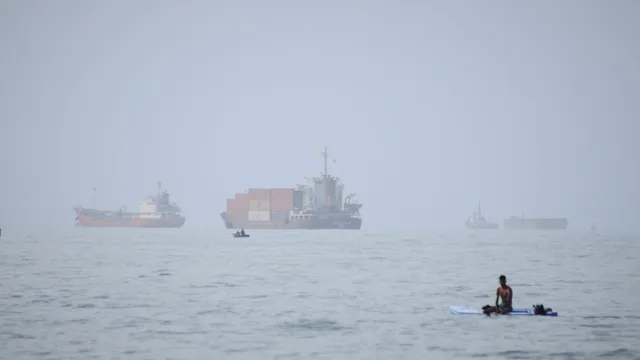
In recent days, tensions have escalated in the Middle East, particularly involving Iran and the United States. An Iranian strike targeted a Chinese firm's building in northern Kuwait, resulting in significant damage and the death of a worker. This incident occurred shortly after Jordan's air defenses successfully intercepted five missiles launched from Iran, which were aimed at U.S. military bases in the region. The U.S. military responded to these provocations by executing a series of airstrikes against multiple targets associated with Iran's Revolutionary Guard Corps, including military command centers and missile facilities. These actions were part of a broader strategy by the U.S. to deter Iranian aggression following an earlier missile attack on a U.S. base in Jordan. The U.S. Central Command confirmed that dozens of targets were struck, indicating a significant escalation in military operations. President Donald Trump had previously vowed to retaliate strongly against Iran for its actions, which he described as part of a continuing pattern of aggression. Meanwhile, Iran reported casualties from a strike on the island of Qeshm, further complicating the situation. The ongoing conflict has raised concerns about the depletion of U.S. military resources and the potential for a wider regional conflict. Saudi Arabia has also been drawn into the fray, accusing Iraqi militias of attacking its oil facilities, which could exacerbate the already precarious global energy situation. Despite these tensions, there have been efforts by mediators to encourage both the U.S. and Iran to return to negotiations, although the recent violence has made this increasingly difficult. The situation remains fluid, with the potential for further escalation as both sides continue to respond to provocations.