
politics
controversial
impactful

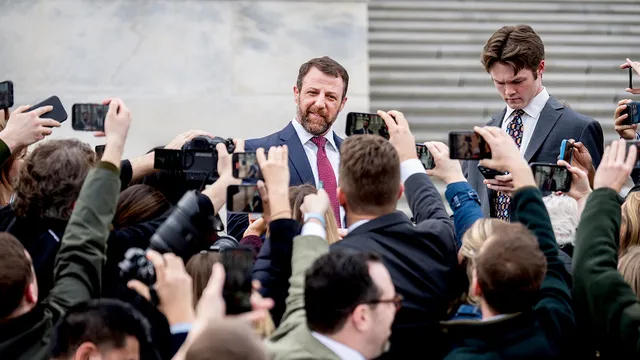
Markwayne Mullin replaces Kristi Noem as homeland security chief

Mar 5, 2026, 1:00 AM171
(Update: Mar 6, 2026, 11:26 PM)
American politician (born 1977)
president of the United States from 2017 to 2021
United States federal department

Markwayne Mullin replaces Kristi Noem as homeland security chief

  • President Donald Trump announced Markwayne Mullin's appointment as the Secretary of Homeland Security, replacing Kristi Noem.
  • Mullin expressed excitement about focusing on keeping the homeland secure, emphasizing support for Trump's immigration policies.
  • His appointment reflects a continued commitment to Trump's administration goals and aims to address ongoing challenges within DHS.
Share your opinion
17

Story

In early March 2026, President Donald Trump announced that Oklahoma Senator Markwayne Mullin would take over as the Secretary of Homeland Security, succeeding Kristi Noem, whose management was under bipartisan scrutiny. Mullin, who had been in the Senate since January 2023, is a staunch supporter of Trump's policies, particularly regarding immigration. He expressed humility about the appointment and acknowledged the support of his family during this transition. With this position, he aims to enforce laws passed by Congress and prioritize national security. Noem has been assigned as Special Envoy for a new security initiative in the Western Hemisphere following her departure from DHS. Mullin will manage a vast agency and its 260,000 employees, recognizing the challenges ahead.

Context

The Department of Homeland Security (DHS) was established in the wake of the September 11 terrorist attacks, with the overarching mission of ensuring the safety and security of the United States from various threats. Its primary goals include preventing terrorism, managing borders, enforcing immigration laws, securing cyberspace, and coordinating disaster response. The DHS plays a crucial role in creating policies and initiatives that help safeguard the nation against both domestic and foreign threats. With a comprehensive approach to security, the DHS seeks to protect both individuals and infrastructure from diverse hazards such as terrorism, cyber-attacks, natural disasters, and pandemics. To achieve its mission, the DHS operates through various divisions and agencies, including the Federal Emergency Management Agency (FEMA), U.S. Customs and Border Protection (CBP), and the Transportation Security Administration (TSA). Each agency has a unique focus that contributes to the overall security framework of the country. For instance, FEMA is predominantly responsible for disaster response and recovery, aiding communities in mitigating the impact of natural disasters, while CBP is instrumental in monitoring and regulating the nation's borders. TSA ensures the safety of air travel by implementing security measures at airports across the nation. In addition to its primary functions, the DHS continuously evolves to meet new challenges posed by emerging technologies and evolving threats. As cyber threats have become increasingly sophisticated, the department has intensively invested in protecting cyberspace through various initiatives aimed at securing critical infrastructure and enhancing the nation’s cybersecurity posture. Public-private partnerships, information sharing, and collaboration with other federal, state, and local agencies are fundamental components of the DHS strategy to bolster resilience against potential threats. Ultimately, the mission and goals of the DHS underscore its commitment to a comprehensive approach in safeguarding the nation. By prioritizing preparedness, response, recovery, and mitigation of threats, the department aims to foster a secure and resilient environment for all Americans. The ongoing challenges necessitate that the DHS remain adaptive and responsive to the ever-changing landscape of security threats, ensuring the protection of citizens while upholding the values of justice and liberty.

2026 All rights reserved
