

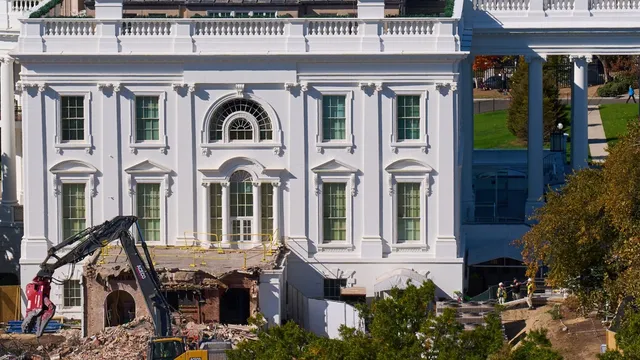
Trump's $400 million ballroom faces scrutiny for lobbying violations
Trump's $400 million ballroom faces scrutiny for lobbying violations
- The White House plans to renovate including a $400 million ballroom, mainly funded by private donations.
- Concerns arise over potential federal lobbying law violations regarding undisclosed donations.
- The ballroom project is part of a broader push by Trump to remake the White House, amid significant backlash.
Story
In the United States, significant renovations are planned for the White House, including a major ballroom project costing $400 million. This project will be funded predominantly through private donations, which has raised concerns regarding potential violations of lobbying laws. The White House has documented its funding sources, detailing that major contributions include donations from individuals and entities connected to the tech and defense industries. These funding details surfaced after growing scrutiny from oversight groups like the Campaign Legal Center, which argued that some lobbyists did not disclose their contributions as required by law. The White House projected a massive increase in funding for repairs and renovations, estimating $377 million for the current fiscal year alone, alongside an additional $174 million for the next fiscal year. This marks a staggering 866% increase from the previous year's expenditure on White House repairs. The funding for these extensive upgrades is being funded outside the standard congressional budget appropriations, deriving instead from donations that are listed in the National Park Service gift account. The ballroom project has become a centerpiece of Trump's wider ambition to transform parts of Washington, D.C. Noteworthy figures within the technology sector, including executives from Meta Platforms and Google, are among the contributors to the project. Nonetheless, these changes have faced backlash, with critics suggesting that the alterations compromise the historical integrity of the residence. Since the announcement, there has been significant tension surrounding the legality of the funding methods and project management. The renovations are intended to address long-standing issues such as water infiltration and the need for updates to electrical infrastructure. The alterations, however, have provoked discussions over their necessity and the impact they will have on this historical landmark. As investigations continue, it remains unclear how these projects will unfold in light of the legal challenges and public scrutiny they have provoked.
Context
data impact insight impact geopolitical shift impact strategic shift analysis insight trends global economic insight global data policy strategic geopolitical insight analysis impact trends insight global analysis shift economic market policy data policy geopolitical shift shift policy market impact shift global strategic impact data geopolitical impact policy trends data analysis market global shift policy data market shift data data data shift data geopolitical market economic data geopolitical strategic global geopolitical strategic trends policy policy market insight insight global trends insight...


