

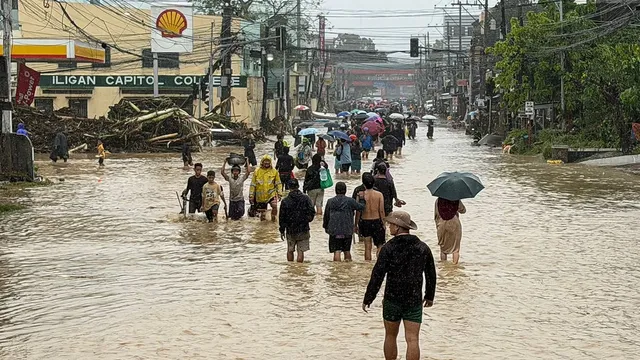
Seven dead after landslides caused by torrential rains in the Philippines
Seven dead after landslides caused by torrential rains in the Philippines
- Torrential rains caused severe landslides and flooding in southeastern Philippines, reportedly killing seven individuals.
- Emergency services worked to recover victims and provide shelter for over 3,200 displaced residents.
- The unusual weather event raised concerns about disaster preparedness amid the looming onset of the typhoon season.
Story
In the southeastern Philippines, severe weather in the form of torrential rain has led to significant casualties and displacement. Over the course of recent days leading up to Friday, February 20, 2026, landslides and widespread flooding occurred, resulting in the tragic deaths of seven individuals, with the disaster striking hard in coastal regions like Mati in Davao Oriental province. The relentless downpours and accompanying thunderstorms caught locals by surprise, occurring ahead of the official typhoon season which typically begins in June. Initial reports indicated that a couple and their two young daughters lost their lives when their home was engulfed by a massive boulder-laden landslide in Mati. In addition to these losses, emergency services were mobilized, utilizing earth-moving equipment to recover the deceased and ensure safety in affected communities. The impact of the extreme weather extended beyond fatalities, as the local government reported over 10,000 individuals affected by the conditions, with approximately 3,200 people forced to evacuate their homes, taking refuge in emergency shelters or with relatives. The Office of Civil Defense's regional director, Ednar Dayanghirang, outlined the scale of the disaster, emphasizing the urgency with which local authorities are responding to preserve lives and secure access to necessities for displaced families. Educational activities were disrupted as schools in several outlying provinces and towns canceled classes, demonstrating the widespread effects of these heavy rainfalls. Forecasters later clarified that the unusual weather was a result of cold winds interacting with warm moist air flowing in from the Pacific, leading to these unforeseen conditions. Typically, the Philippine archipelago experiences about 20 typhoons and storms annually, a fact underscored by its geographic location within the Pacific 'Ring of Fire'—an area known for high seismic activity, including earthquakes and volcanic eruptions. The unfortunate events this week highlight the vulnerability of communities in the region when faced with extreme weather phenomena, raising questions about disaster preparedness and response capabilities in a nation often battered by natural calamities. The emergency operations are ongoing, and the full extent of damage and recovery needs is still being assessed as authorities strive to navigate the immediate challenges posed by the flooding and landslides. As recovery efforts unfold, focus remains on ensuring safety and managing the health needs of those displaced while aiming to rebuild the affected areas in the aftermath of this disaster.
Context
The Philippines is frequently subjected to a variety of natural disasters, including typhoons, earthquakes, volcanic eruptions, and floods due to its geographical location in the Pacific Ring of Fire and its exposure to monsoon weather patterns. This pronounced vulnerability necessitates a robust disaster preparedness strategy to mitigate the impact on communities, infrastructure, and the economy. The government of the Philippines, recognizing the critical need for disaster preparedness, has adopted comprehensive frameworks aimed at strengthening resilience against natural calamities. These frameworks include the National Disaster Risk Reduction and Management (NDRRM) Act, which provides a structured approach for disaster management at the national and local levels, promoting risk reduction and ensuring efficient response mechanisms during emergencies. An essential aspect of disaster preparedness in the Philippines involves community engagement and education. Nongovernmental organizations (NGOs), community groups, and local government units work collaboratively to raise awareness on disaster risks and response strategies. Educational programs and drills are designed to empower communities by equipping them with the knowledge of evacuation protocols and basic survival skills. This grassroots approach fosters a culture of preparedness, enabling communities to respond effectively when disasters strike. Additionally, the integration of technology, such as early warning systems and mobile apps for disaster updates, has significantly improved real-time response capabilities. Infrastructure plays a pivotal role in reducing vulnerability and enhancing resilience. The government has launched various initiatives to upgrade critical infrastructure, including flood control systems, earthquake-resistant buildings, and improved transportation networks. These investments are important not only for immediate response capabilities but also for long-term recovery and sustainable development. Moreover, partnerships with international organizations and private sectors have facilitated funding and technical assistance for disaster risk management projects across the country. This collaborative effort aims to build resilient infrastructures that can withstand the impact of disasters and reduce economic losses. Nonetheless, challenges persist in the implementation of disaster preparedness strategies. Limited resources, bureaucratic inefficiencies, and the unpredictable nature of climate change complicate the effectiveness of current measures. Continuous evaluation and adaptation of strategies are crucial to address these challenges while considering the evolving socio-economic landscape of the Philippines. As the country faces an increasing frequency of natural disasters, the commitment to disaster preparedness and response must remain a national priority, ensuring safety and enhancing the resilience of both communities and the nation as a whole.


