

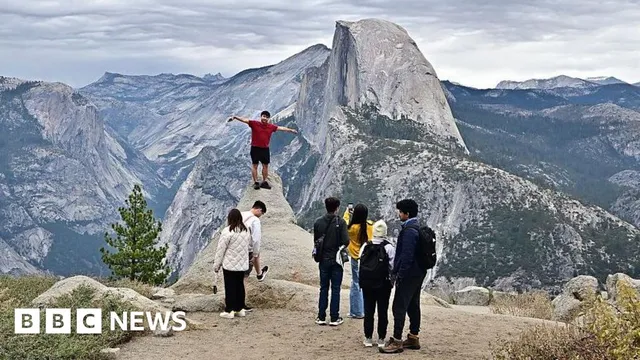
Foreign tourists face $100 fee hike for national parks entry
Foreign tourists face $100 fee hike for national parks entry
- Starting January 1, 2026, foreign visitors will pay an extra $100 at 11 popular U.S. national parks.
- Annual pass fees for international visitors will increase to $250, while U.S. residents will pay $80.
- The new fee policy aims to support park conservation and reflects a push to prioritize American citizens.
Story
In recent decisions announced by the National Park Service, notable changes are being implemented for the entry fees to U.S. national parks affecting international tourists. From January 1, 2026, visitors from outside the United States will be required to pay an extra $100 on top of existing fees to enter 11 of the most popular parks, which include the Grand Canyon, Yellowstone, and Yosemite. This fee increase aims to support the conservation and maintenance efforts of the parks and reflects the broader push to prioritize access for American citizens. The changes come as the U.S. government, under the Trump administration, has made moves to recover from significant staff reductions and budget cuts within the National Park Service. Alongside these fee adjustments, the government has prioritized budget allocations for upgrading facilities and maintaining the national parks. The Secretary of the Interior, Doug Burgum, stated that the initiative is part of "America-first entry fee policies," ensuring that taxpayers who contribute to the park services enjoy affordable access, while international visitors contribute a fair share to park maintenance. Moreover, starting in 2026, the cost for an annual pass for non-residents will increase to $250, while U.S. residents will maintain a lower cost of $80. This policy reflects an ongoing trend in U.S. national parks, which have experienced record numbers of visitors, particularly from international travelers. Statistics reveal that, in 2024, foreign visitors made up nearly 15% of those visiting Yellowstone, a significant drop from 30% only six years earlier. This demographic shift emphasizes the evolving landscape of tourism in the national parks and suggests a reliance on American visitors for sustained revenue. Future implications of these fee structures include a decrease in the number of international visitors due to increased costs, while simultaneously reinforcing the financial burden placed on these travelers. While there are eight designated fee-free days in 2026 for U.S. residents, international tourists will not benefit from these initiatives, potentially leading to criticism regarding equitable access to national parks. Adjustments to park fees, including the newly implemented charges, aim to bolster funds for necessary improvements to visitor facilities and overall park experiences, thereby promising to maintain the parks' integrity for future generations. This shift in policy signifies a substantial transformation in how America’s national treasures are funded and accessed, prioritizing U.S. taxpayers while potentially limiting access for international guests who contribute significantly to tourism revenue. As these changes are set to take effect, the national parks face new challenges and opportunities in continuing to provide engaging experiences amid evolving participation demographics and financial models.
Context
The history of entry fees in national parks in the USA is a reflection of the evolving priorities and funding mechanisms for conservation and public access to natural spaces. Initially, when the national park system was formed in the late 19th and early 20th centuries, there were little to no entrance fees. Parks were established to preserve unique landscapes and ecosystems, with the intention that these natural areas would remain free for public enjoyment. The establishment of Yellowstone National Park in 1872 marked the beginning of this endeavor in the USA. Funding for park management and maintenance primarily came from federal appropriations and local initiatives, which often proved insufficient as visitation grew in the mid-20th century. As the number of visitors increased, so did the maintenance and management costs of these natural areas. Consequently, the introduction of entry fees became necessary to support the growing demand for facilities and infrastructure while maintaining the ecological integrity of the parks. By the 1960s, many parks began implementing modest entrance fees to generate additional revenue. This change was met with mixed reactions from the public, with some arguing that fees restricted access while others recognized the need for sustainable funding for park services, including trail maintenance, restroom facilities, and ranger programs. In response to these concerns, the National Park Service (NPS) committed to using these funds to enhance visitor experiences while ensuring the protection of natural and cultural resources. Over time, this initial fee structure evolved into more variable pricing tiers, including vehicle passes, individual passes, and annual park passes, accommodating different visitor demographics and encouraging recurrent visits. As public interest in outdoor recreation intensified and national parks became prime destinations for millions of Americans and international tourists, the pricing structure for entry began to reflect a more comprehensive funding strategy. Fees were raised periodically, often to establish a more robust financial framework capable of supporting infrastructure upkeep and accommodating increasing visitor numbers. These adjustments were typically accompanied by public outreach efforts to communicate the purpose behind fee increases and to emphasize the importance of funding for visitor services and conservation practices. In recent years, the NPS has also introduced more dynamic fee structures that vary by park and season to manage congestion during peak times while encouraging visitation during off-peak periods. Looking towards the future, the conversation around entry fees in national parks is likely to continue to evolve as the parks face the dual challenges of increased visitation and the need for sustainable funding in the face of environmental changes. The ongoing dialogue between park authorities and the public will be crucial to balancing access with conservation efforts. Developing innovative funding solutions, including partnerships with local communities and leveraging technology for visitor engagement, will also play a significant role in shaping the trajectory of entry fees in national parks across the USA. Ultimately, the history of these fees reflects a broader societal understanding of the value of nature in fostering well-being and the collective responsibility to safeguard these irreplaceable resources for generations to come.


