

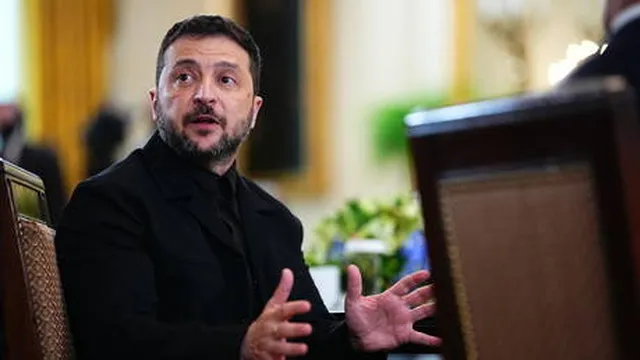
Andrey Yermak faces pressure to resign amid corruption scandal
Andrey Yermak faces pressure to resign amid corruption scandal
- Andrey Yermak is facing serious allegations related to a $100 million kick-back scheme in Ukraine's energy sector.
- Opposition MPs are demanding his resignation, creating significant political pressure on President Zelensky.
- The scandal could lead to a reshaping of the political landscape in Ukraine, depending on the actions taken against Yermak.
Story
Ukraine is currently facing a significant political crisis as the country grapples with allegations of corruption linked to Andrey Yermak, who serves as the chief of staff to President Volodymyr Zelensky. Reports indicate that Yermak is implicated in a major corruption scandal involving a kick-back scheme estimated at around $100 million within the country’s energy sector. This scheme reportedly involved former business partners of Zelensky, who pressured contractors associated with the state nuclear operator Energoatom to pay kickbacks ranging from 10% to 15% of their contract value. The corruption allegations have ignited intense debate within the Ukrainian parliament, with notable opposition figures openly calling for Yermak's resignation and positioning the scandal as a potential threat to Zelensky's administration. As calls for Yermak's dismissal intensify, key figures within Zelensky’s political faction have given an ultimatum that Yermak must be removed or they might resign from the party themselves. The situation has escalated to the point where discussions have taken place within the parliament about the president's options regarding Yermak’s future. Some have speculated that Zelensky could choose to fire Yermak as soon as Thursday. However, a considerable faction within the party argues that Yermak's departure would lead to political upheaval, as many current cabinet members are closely associated with him. Yermak's deep-rooted ties with Zelensky date back to 2010 when they started their professional relationship, which was cemented when Yermak was appointed chief of staff in 2020 after serving as a foreign policy adviser earlier. His role as a trusted confidant has enabled him to accumulate considerable influence over decisions affecting both domestic and foreign policy. This closeness has led to serious implications for Zelensky given that firing Yermak could jeopardize the stability of his administration. Additionally, a published report from the National Anti-Corruption Bureau of Ukraine unveiled recordings that could further implicate Yermak in this high-profile scandal. Despite the mounting evidence and growing calls for accountability, President Zelensky has not publicly implicated himself in these allegations, maintaining his support for Yermak while navigating the delicate political landscape during this ongoing crisis.
Context
The impact of the Yermak scandal on President Volodymyr Zelensky's presidency has been profound, influencing public perception, political dynamics, and governance in Ukraine. The scandal centers around Andriy Yermak, the head of the Ukrainian President's Office, whose actions brought to light concerns regarding transparency and integrity within Zelensky's administration. This controversy has triggered a wave of criticism from various political factions, civil society, and the media, all calling for accountability and reform. As one of Zelensky's closest aides, Yermak's involvement in alleged corruption undermines the credibility of the anti-corruption measures that were central to Zelensky's campaign and presidency, putting at risk the trust he built with the electorate and international partners. The fallout from the Yermak scandal has not been limited to public opinion; it has also stirred unrest within the ruling coalition. Political allies and opponents alike have seized on this opportunity to challenge Zelensky's leadership, questioning his ability to control his administration and execute reforms. The tension created by this scandal has led to calls for Yermak's resignation, impacting the stability of the government. As internal divisions become more pronounced, Zelensky must navigate these complexities while maintaining a unified front against the backdrop of ongoing geopolitical tensions and economic challenges in Ukraine. Furthermore, the Yermak scandal has implications for Zelensky's international relations, notably with Western allies who have been supportive of Ukraine's reforms. The commitment of these partners hinges on the perceived integrity of the Ukrainian leadership in combating corruption. The scandal risks eroding the goodwill that Zelensky has fostered with Western nations, potentially affecting foreign aid and investment needed for Ukraine's recovery and modernization. The administration's response to the allegations and its commitment to transparent governance will play a crucial role in reassuring both domestic and international stakeholders. In conclusion, the Yermak scandal represents a significant test for President Zelensky's presidency. The damage inflicted on public trust, political stability, and international relations will require decisive and effective responses from Zelensky and his team. An immediate focus on transparency, accountability, and reform is essential to restore faith in the administration and to continue the momentum of his presidency. Failure to adequately address the fallout from the Yermak scandal could lead to more profound challenges for Zelensky's legitimacy and the political landscape of Ukraine in the years to come.


